
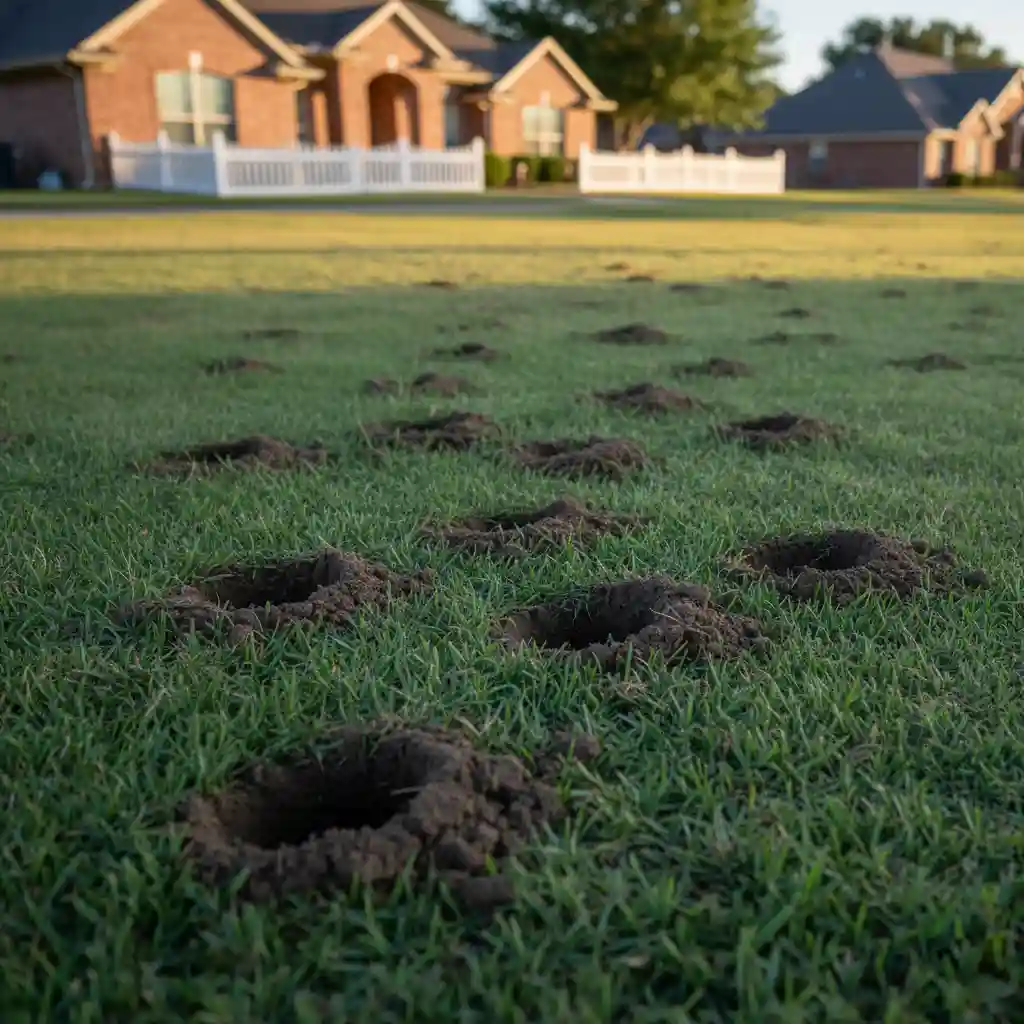
You’ve spent countless hours and money cultivating a beautiful Texas lawn, only to wake up one morning to what looks like a miniature battlefield. Small, cone-shaped holes dot your flower beds, or perhaps large patches of sod have been completely rolled back. It’s frustrating, and it’s a clear sign you have a nocturnal visitor.
But who is the culprit? In Texas, the list of suspects is unique. Identifying the animal digging in your yard is the first step toward reclaiming your property.
This guide will turn you into a backyard detective, helping you identify the animal based on the evidence it leaves behind.
The Suspect Lineup: Comparing the Damage
Different animals dig for different reasons and leave behind distinct types of holes. Use this quick-reference chart to identify your primary suspect.
| Animal Suspect | Hole Description | Time of Activity | Primary Motive (What they’re eating) |
| Armadillo | 3-5 inches wide, cone-shaped, 1-3 inches deep. Looks like someone poked your lawn with a small shovel. Often random and numerous. | Night | Grubs & Earthworms. They use their powerful noses and claws to dig for insects in the soil. |
| Skunk | Smaller, shallower, cone-shaped holes, often in a concentrated area. The turf may look slightly disturbed or pushed up. | Night | Grubs & Larvae. Similar to armadillos but their digging is less destructive and more precise. |
| Opossum | Not a primary digger. They create shallow, indistinct holes with their noses while searching for food, often near trash cans or pet food bowls. | Night | Opportunists. They eat anything from insects to fallen fruit and pet food. |
| Pocket Gopher | Creates large, crescent-shaped mounds of fresh dirt on the surface with a plugged hole in the center. They create tunnels underground. | Day & Night | Plant roots. They are vegetarians and a major threat to gardens. |
A Deeper Look at the Common Culprits
Suspect #1: The Armadillo (Texas’s Unofficial Mascot)
If your lawn looks like it’s been aerated by a clumsy golfer, you almost certainly have an armadillo. These armored pests are incredibly common throughout Texas.
Key Armadillo Signs:
Cone-shaped holes scattered across the entire lawn.
Uprooted plants and flowers in your garden beds.
Damage is often widespread and appears overnight.
Why They Are a Problem: Beyond ruining your lawn, armadillos are powerful diggers. Their extensive burrows, often located under your home’s foundation, AC unit, or deck, can compromise structural integrity over time. They are also known carriers of leprosy.
Suspect #2: The Skunk (The Smelly Digger)
Skunk damage is often mistaken for armadillo damage, but it’s typically less severe and more focused.
Key Skunk Signs:
Small, neat, cone-shaped holes, usually in one or two specific areas of the lawn where grubs are plentiful.
You may notice a faint, musky odor in the area, especially in the early morning.
The primary risk is a defensive spray to you, your family, or your pets.
Can I Solve This Myself? (The DIY Dilemma)
It’s tempting to buy a bag of grub killer or a generic trap from the store. Unfortunately, these methods rarely provide a long-term solution.
-
Repellents Are Ineffective: Scent-based repellents (like cayenne pepper or castor oil) wash away with the first Texas rainstorm.
-
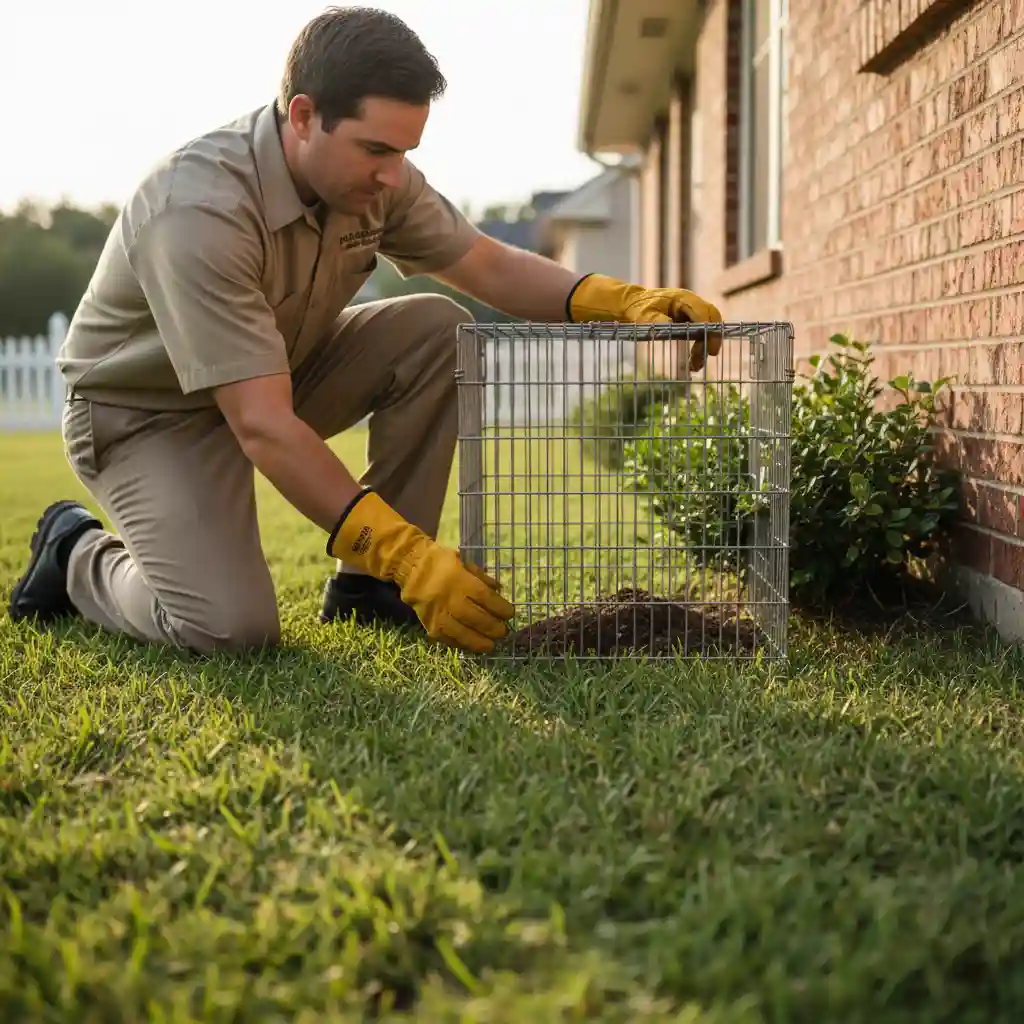
Trapping is Difficult: Setting a trap in the right location with the right bait requires experience. An improperly set trap is just a new lawn ornament.
-
The Problem is the Food Source: Even if you trap one animal, your lawn is still full of delicious grubs. A new skunk or armadillo will simply move in to take its place next week.
Warning: Never try to corner or handle a wild animal yourself. Skunks can spray from 10 feet away, and while armadillos are not aggressive, they can carry diseases.
The Only Permanent Solution: Trapping & Exclusion
The most effective way to reclaim your yard is a two-step professional approach:
-
Trapping & Removal: A licensed professional will use species-specific traps to safely and humanely remove the target animal(s).
-
Exclusion & Habitat Modification: The expert will advise on long-term solutions, such as installing exclusion barriers around decks and foundations or implementing a professional grub control plan to make your yard less attractive.
Don’t let your beautiful Texas lawn become a nightly buffet for destructive pests.
If your yard is under attack, call our 24/7 dispatch center. We’ll connect you with a local Texas expert who can provide a full property inspection and a lasting solution.