
It starts faintly. A strange, unpleasant smell you can’t quite place. You check the trash, clean the fridge, and run the garbage disposal, but the odor persists. Over the next few days, it grows stronger, becoming an unbearable, sickly-sweet stench that permeates your entire home.
If you’re experiencing a foul odor that you can’t identify, you are likely dealing with one of a homeowner’s worst nightmares: a deceased animal trapped somewhere within your home’s structure.
Ignoring it won’t make it go away. In fact, it’s the start of a much larger biological hazard. This guide explains the signs, the risks, and the necessary steps to safely resolve the issue.
Identifying a Dead Animal Smell
A decomposing animal has a very distinct odor that is different from sewage, mold, or gas leaks.
The Smell Profile: Most people describe it as a combination of rotten cabbage, spoiled meat, and a nauseatingly sweet chemical odor. It’s a smell that “sticks” in your nostrils and often gets worse in warmer weather or when the HVAC system kicks on.
Use this chart to help pinpoint the location and potential culprit.
| Odor Location | Common Animal | Associated Risks |
| Inside a Wall or Ceiling | Rat, Mouse, or Squirrel | Blowfly infestation, fluid stains on drywall, permanent odor absorption. |
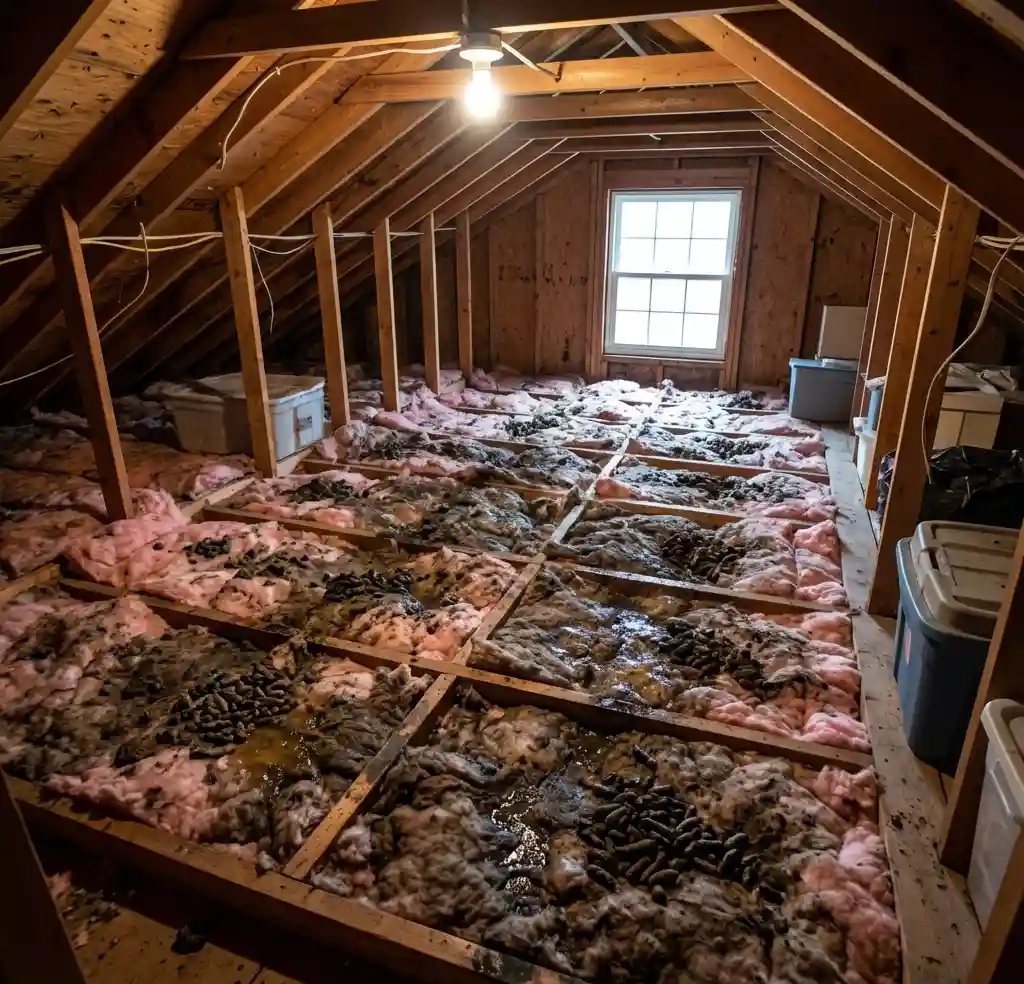
| In the Attic | Raccoon, Opossum, or Squirrel | Insulation contamination, parasites (fleas/ticks) leaving the body, structural damage. |
| In the Crawlspace or Under a Deck | Opossum, Raccoon, or Skunk | Attracting other scavengers (coyotes, vultures), soil contamination, pet safety risks. |
| Coming from Vents | Animal died inside the ductwork | Spreading airborne bacteria and foul odor throughout the entire house. |
The Hidden Dangers: Why This is a Health Emergency
A dead animal is more than just an unpleasant smell; it’s a biohazard.
-
Bacteria and Pathogens: The decomposition process releases dangerous bacteria into the air and surrounding materials. Diseases can be transmitted without direct contact.
-
Secondary Pest Infestations: A carcass is a breeding ground for a host of other pests.
-
Blowflies and Maggots: Often the first to arrive, leading to a fly infestation in your home.
-
Carrion Beetles & Mites: These insects will feast on the remains and can then spread to other areas.
-
Scavengers: An outdoor carcass will attract larger, more dangerous animals to your property.
-
-
Structural Damage: Bodily fluids can seep into drywall, wood, and insulation, causing permanent stains and damage that require professional removal and repair.
Warning: Never attempt to remove a dead animal yourself, especially if it requires cutting into drywall or entering a confined space like an attic or crawlspace. You risk exposure to serious diseases and may not have the proper equipment to fully sanitize the area.
The Professional Removal & Sanitization Process
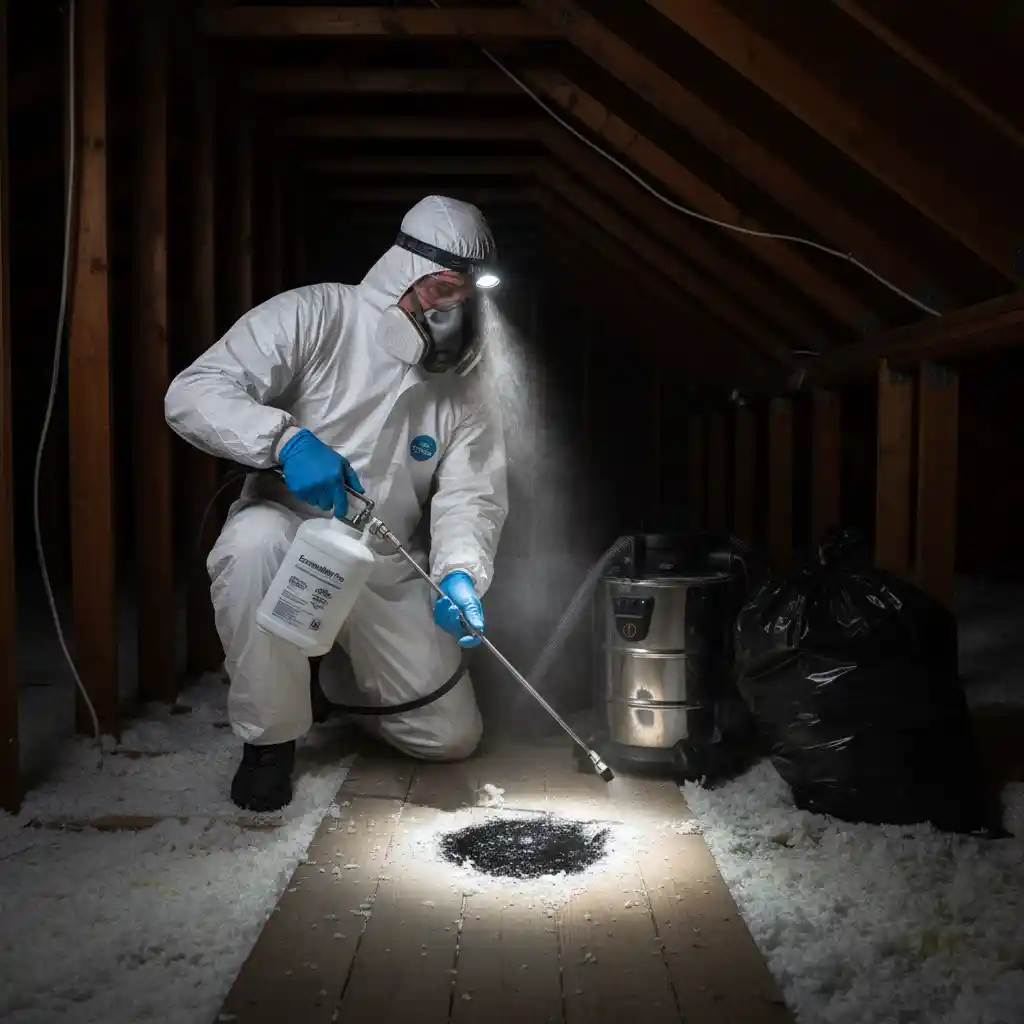
Resolving a dead animal issue is a precise, multi-step process that goes far beyond simply removing the body.
-
Step 1: Location. A professional uses experience and sometimes specialized tools (like moisture meters or thermal cameras) to pinpoint the exact location of the carcass with minimal damage to your property.
-
Step 2: Extraction. The animal is carefully removed. If it’s inside a wall, a small, precise cut is made to extract it, which can be easily patched later.
-
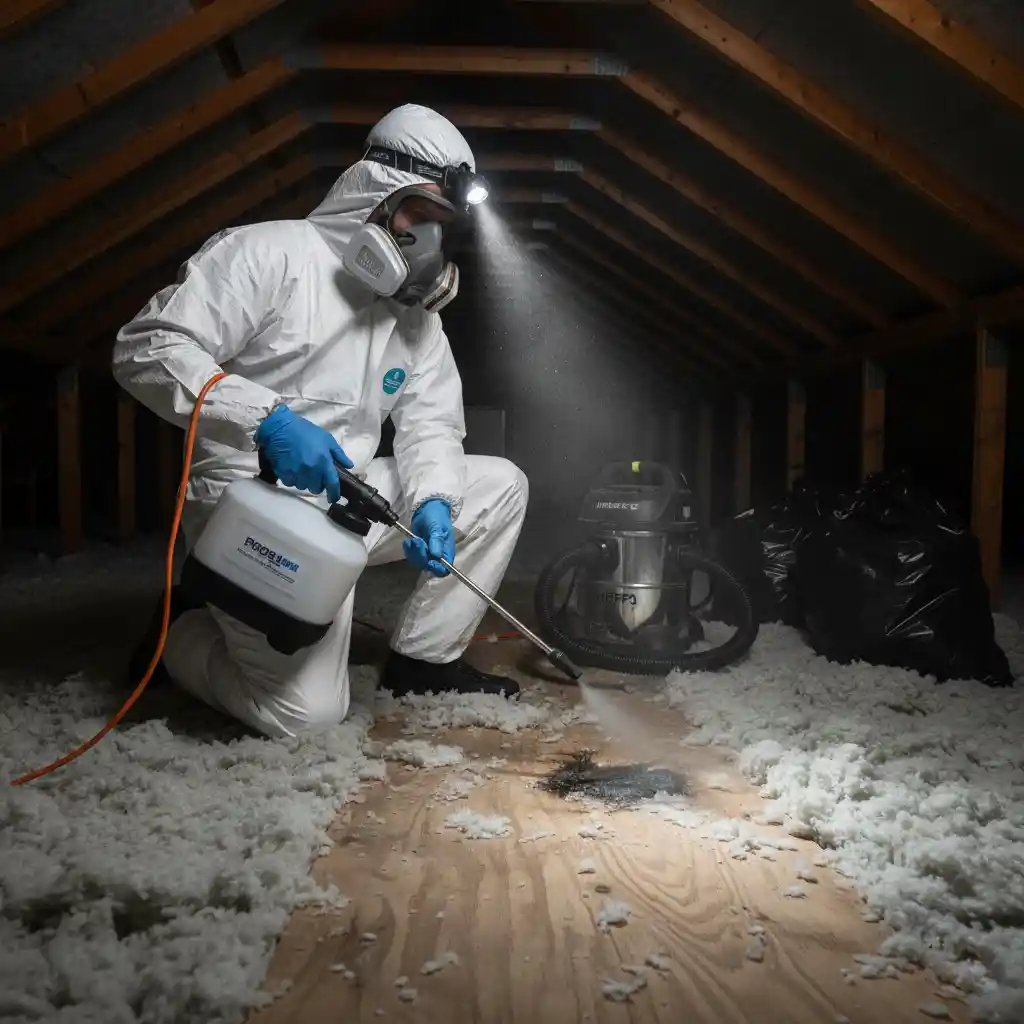
Step 3: Decontamination. This is the most critical step. The area is treated with a commercial-grade enzymatic cleaner that breaks down organic matter, neutralizes bacteria, and kills parasites. Simple bleach is not effective.
-
Step 4: Deodorization. Professional-grade deodorizers are used to eliminate any lingering odor molecules that may have absorbed into wood or drywall.
-
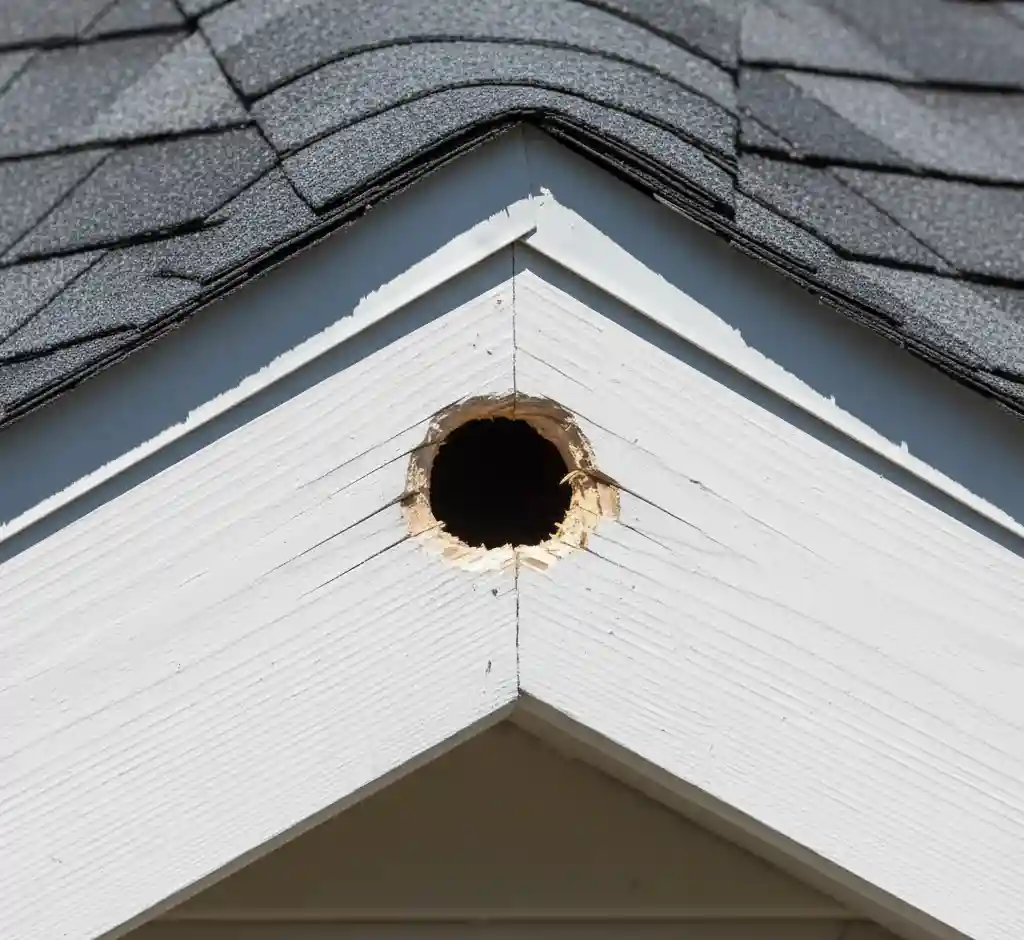
Step 5: Exclusion (Prevention). The technician will then perform an inspection to find out how the animal got in in the first place and recommend sealing the entry points to prevent this from ever happening again.