
It’s a beautiful afternoon in Texas. You’re gardening or letting the dog out, and suddenly you freeze. There’s a slithering movement in the grass. A snake.
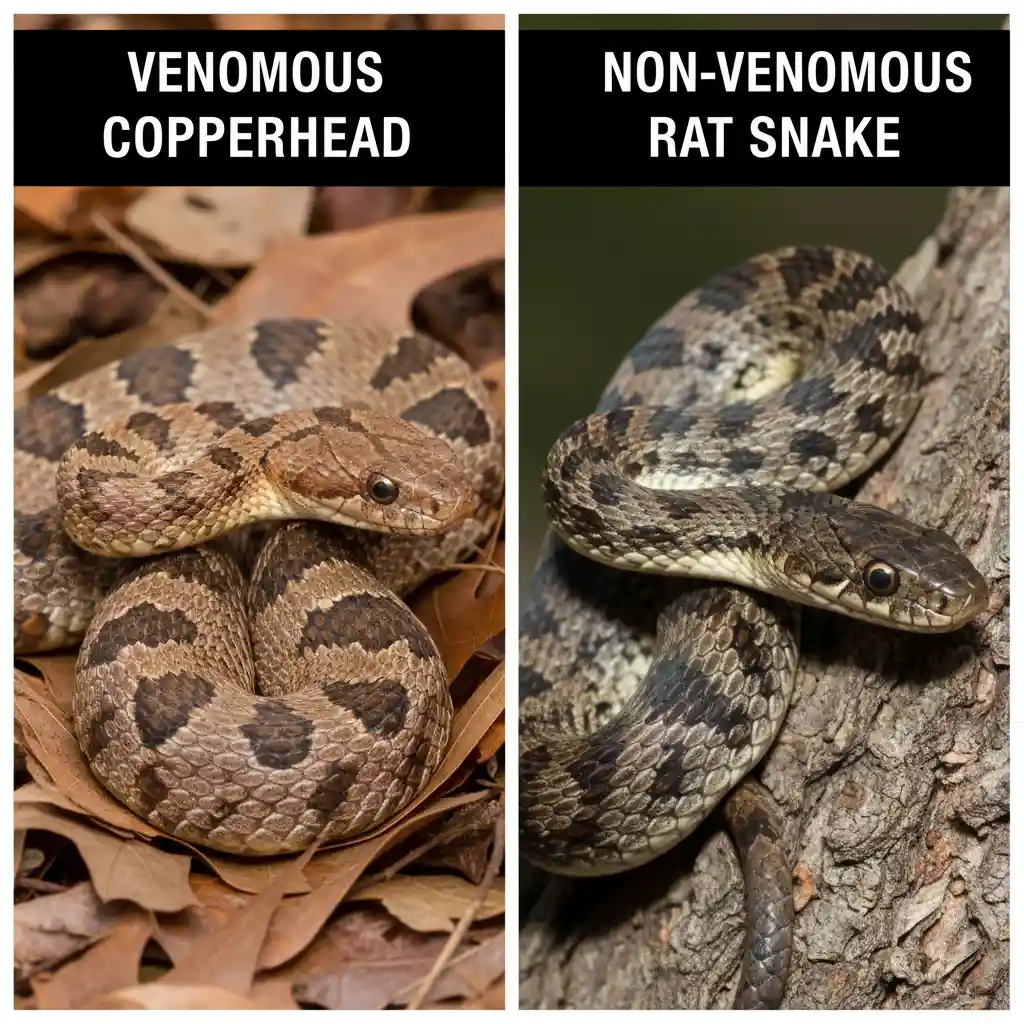
Your heart rate spikes. Is it a harmless Rat Snake keeping the rodent population down? Or is it a venomous Copperhead waiting to strike?
In Texas, we coexist with over 100 species of snakes, but only about 15 are venomous. However, misidentifying them can be a painful—and expensive—mistake.
This guide will help you identify the “Big 4” venomous snake groups found in our state and tell you exactly what to do if you encounter one.
💡 Have a photo? Don’t guess. Use our Free AI Wildlife Identifier Tool to get an instant analysis of the snake in your yard.
The “Big 4” Venomous Snakes in Texas
1. The Copperhead (The Master of Camouflage)
Copperheads are the most common venomous snake encountered in Texas suburbs (like Plano, Frisco, and The Woodlands). They blend in perfectly with dried leaves.
-
Key Identifier: Look for the “Hershey’s Kiss” pattern. Dark, hourglass-shaped bands on the sides of their tan body look like chocolate kisses.
-
Habitat: Wood piles, garden beds, and tall grass.
2. The Rattlesnake (The Warning System)
Most people know the sound, but you might not always hear the rattle before you see the snake.
-
Key Identifier: A triangular head that is much wider than the neck, and of course, the rattle at the end of the tail (though baby rattlesnakes may not have a rattle yet).
-
Habitat: Rocky areas, under decks, and open fields.
3. The Water Moccasin / Cottonmouth (The Water Dweller)
Often confused with harmless water snakes, Cottonmouths are semi-aquatic pit vipers.
-
Key Identifier: When threatened, they open their mouths wide, revealing a stark white interior (hence the name). They tend to swim on top of the water, whereas non-venomous water snakes swim with only their heads exposed.
-
Habitat: Near pools, creeks, drainage ditches, and bayous (common in Houston).
4. The Coral Snake (The Colorful Deceiver)
This snake is confusing because it looks just like the harmless Milk Snake. Remember the rhyme?
“Red touch yellow, kill a fellow. Red touch black, friend of Jack.”
-
Key Identifier: Bands of Red, Yellow, and Black. If the red bands touch the yellow bands, it is venomous.
-
Habitat: Leaf litter and dense vegetation.
Quick Comparison: Venomous vs. Non-Venomous
If you can’t identify the specific species, look for these general traits. (Note: The Coral Snake is an exception to these rules).
| Feature | Venomous (Pit Vipers) | Non-Venomous (Safe) |
| Head Shape | Broad, Triangular (Arrow-shaped) | Narrow, Oval (Rounded, same width as neck) |
| Eye Pupil | Vertical Slits (Like a cat) | Round Pupils |
| Pits | Has heat-sensing pits between eye and nostril | No pits present |
| Behavior | Often coils and holds ground | Often flees rapidly |
What To Do If You See a Snake
1. Stop and Back Away:
Do not try to kill it. Most snake bites happen when people try to kill or handle the snake. Give it space.
2. Secure Pets and Children:
Bring dogs and kids inside immediately. Curious pets are the most frequent victims of snakebites.
3. Identify from a Distance:
Take a picture if you can do so safely (zoom is your friend). You can upload this description to our AI Identification Tool for a quick check.
4. Call a Professional:
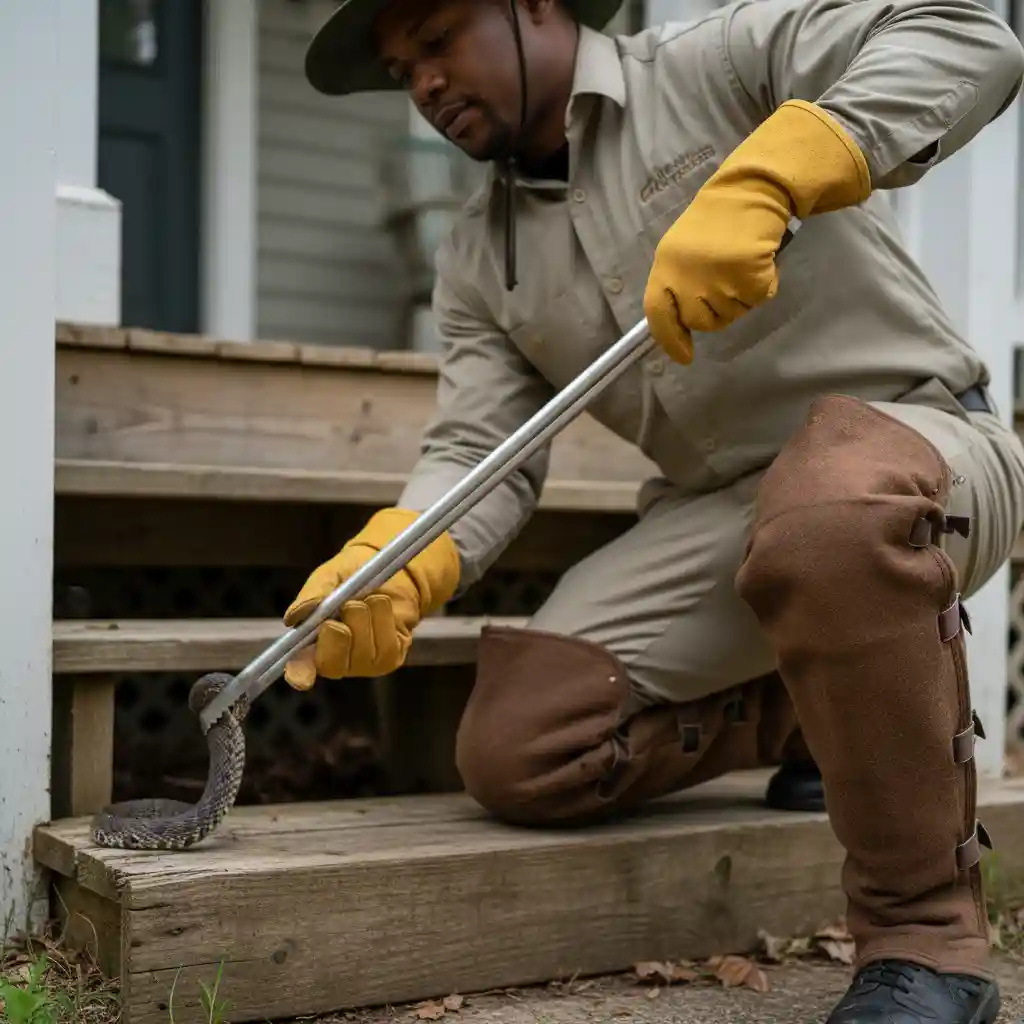
If the snake is in your garage, on your porch, or near your children’s play area, do not wait for it to leave. It may be setting up a nest.
Professional Snake Removal & Exclusion
At US Wildlife Dispatch, we don’t just remove the snake; we find out why it’s there. Snakes are usually following a food source (rats or mice).
-
We safely trap and remove the snake.
-
We inspect your property for rodent infestations (snake food).
-
We apply snake repellents and seal entry points to your crawlspace.
Don’t risk a hospital visit. If you have an unwanted guest slithering in your yard, call our 24/7 dispatch line immediately.