You may find soil across the patio, an exposed root ball or a seedling tipped onto its side. Those observations deserve different responses. Replacing every plant or adding a repellent before checking the damage can leave the actual problem unchanged.
Record what happened to the plant, not just the mess
Take a photograph before tidying. Note whether the container remained upright, which part of the surface was disturbed, whether roots are exposed and whether any stem or foliage is missing. Record the interval between the last undamaged check and discovery. Do not label the incident “overnight” unless the checks support that timing.
If there is no observed animal, leave the cause uncertain. Ask your local Extension office about damaged roots, plant health or an unstable container when those are the main findings. This page is not a disease diagnosis or proof that every patch of spilled potting mix was dug by wildlife.
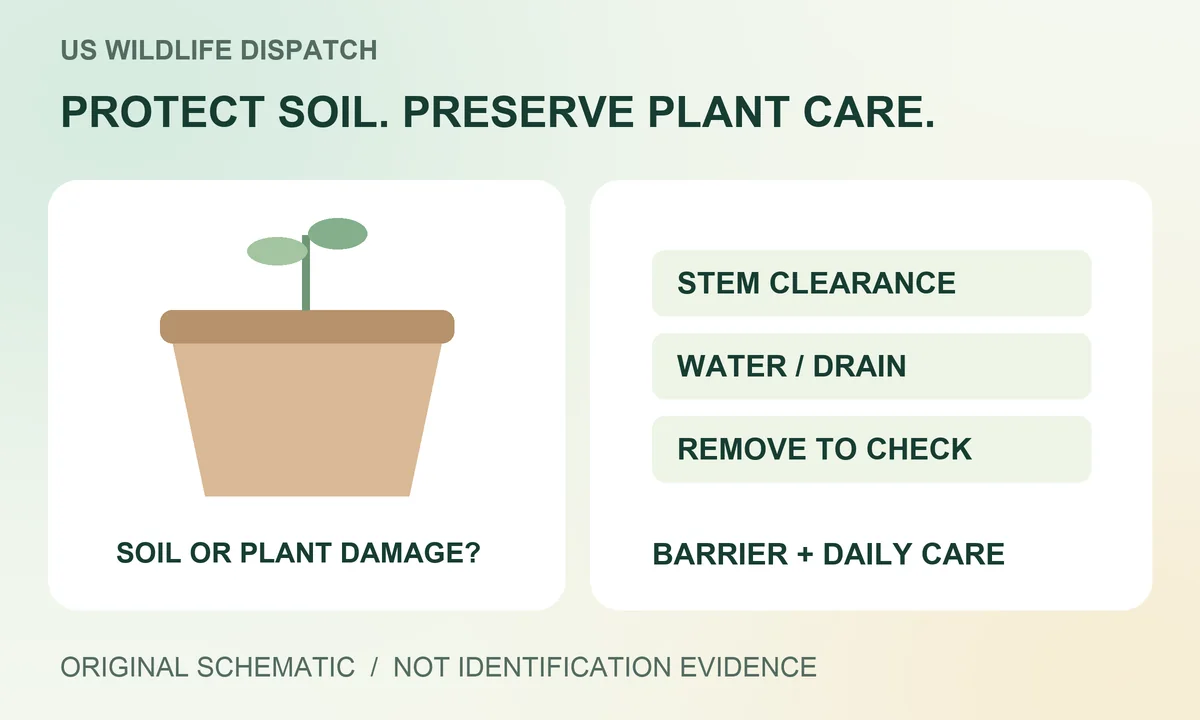
Digging does not always mean the plant is food
An Ask Extension response explains that squirrels cache food in soil and recommends physical barriers for affected pots. That gives one plausible explanation for digging, not a diagnosis of your container. Do not assume an uneaten plant rules wildlife out, or that a plant on the ground proves deliberate feeding.
Use observations you already have: an animal filmed entering the pot, a nut left in the mix, or repeated disturbance confined to accessible soil. Keep the observation and your interpretation separate. Do not add food to obtain a photograph or handle droppings as an identification test.
Choose protection you can inspect and remove
Ask Extension describes metal mesh barriers as an option against squirrel digging and notes that plastic can be chewed. It does not supply a guaranteed fit for every container. A surface guard and a cage around the whole plant also solve different problems: one limits soil access; the other may be considered when above-ground growth is affected.
- Plant clearance: do not press a barrier against stems or trap emerging growth. Recheck the fit as the plant changes.
- Daily care: you still need to water, inspect the mix and remove the guard for maintenance without damaging roots.
- Container function: keep drainage outlets working. Do not turn an ordinary pot into a sealed container to exclude animals.
- People and wildlife: avoid sharp exposed edges, projecting stakes and loose entangling material. If an animal is already caught, stop and seek wildlife assistance rather than tightening the barrier.
This is a selection checklist, not instructions to cut or install wire. A nursery or Extension adviser can help choose an arrangement appropriate to your plant and pot. There is no universal opening size or household material that we certify as safe.
Moving a pot has gardening trade-offs
A different location may make monitoring easier, but it is not proof of exclusion. UMD's container guidance emphasizes light, water, drainage and stability. Do not move a sun-requiring plant into a dark room just to hide it from an animal, or lift a heavy filled container without an appropriate plan.
Make one manageable change and retain before-and-after photographs. Check whether disturbance continues and whether the plant remains accessible for care. No new damage during a brief interval is an observation, not a permanent squirrel-proof guarantee.
When the problem is no longer just potting mix
If the main damage is eaten fruit or leaves, send photographs of those parts for assessment rather than increasing soil coverage. If you see a ground nest, young animal or trapped wildlife, do not cover the pot until appropriate advice is obtained. Keep pets from investigating the site.
If a separate opening in the yard keeps returning after you fill it, use the repeated yard-hole checklist for that location. That is a different task from protecting soil in a container; it does not prove the same animal caused both problems.
Sources and limits
Reviewed October 22, 2026 (U.S. Eastern date): Ask Extension's June 2026 pot-digging response and UMD container care. The first is an Extension team volunteer response, not a tested product trial. No animal, plant or barrier was inspected; we do not recommend spices, poisons or improvised traps.