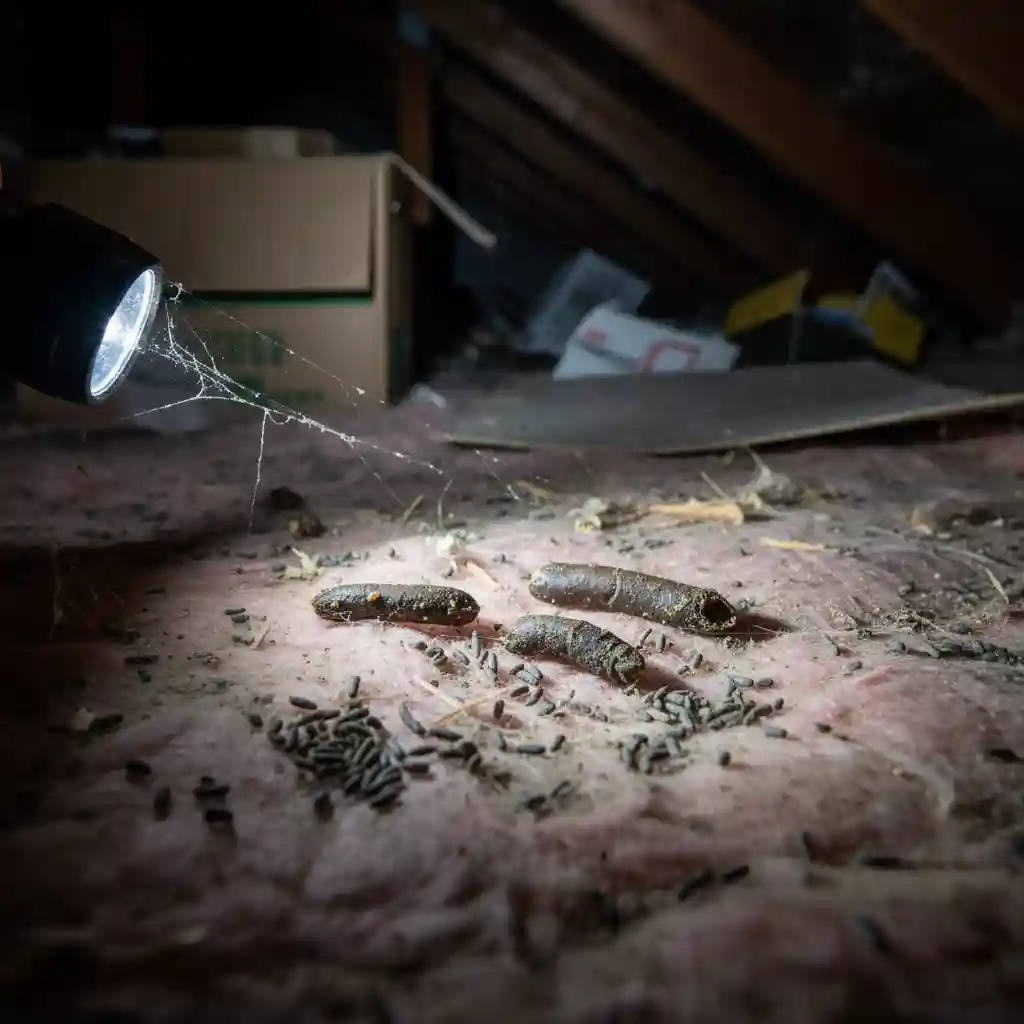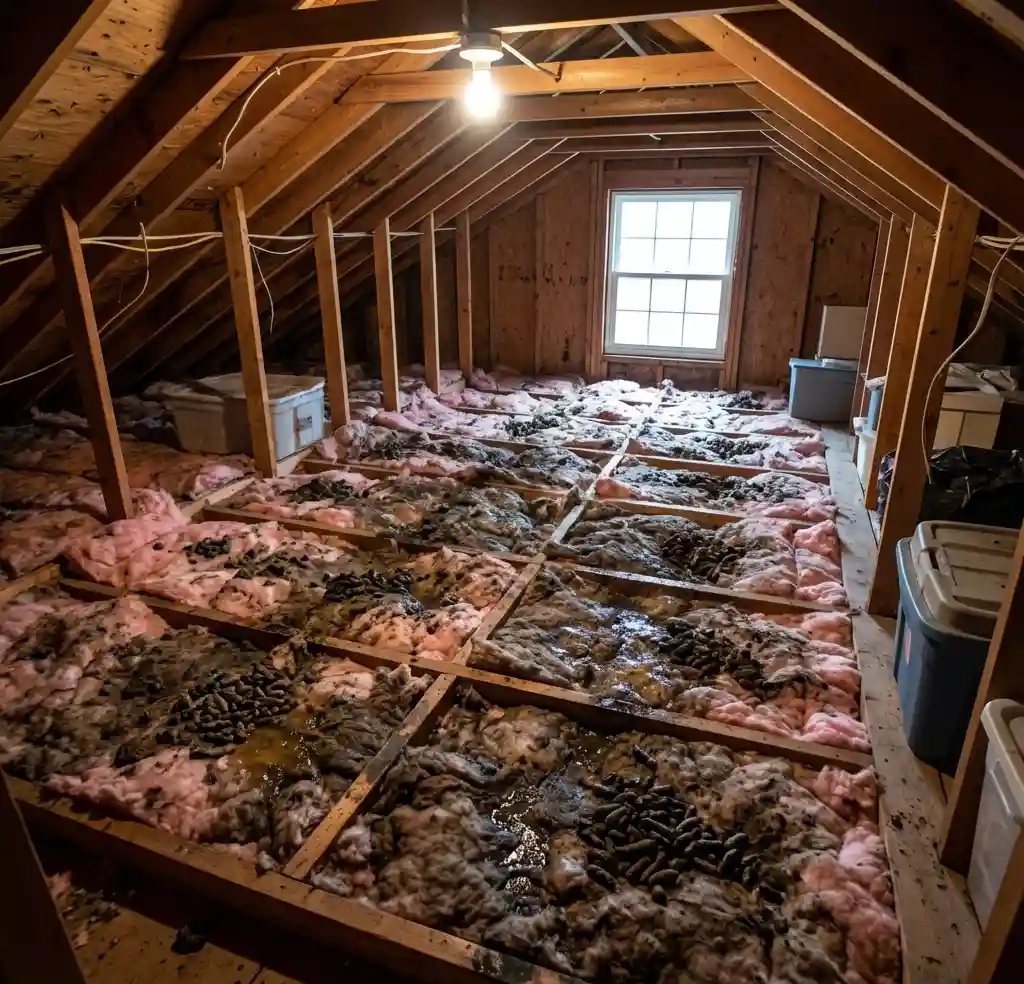

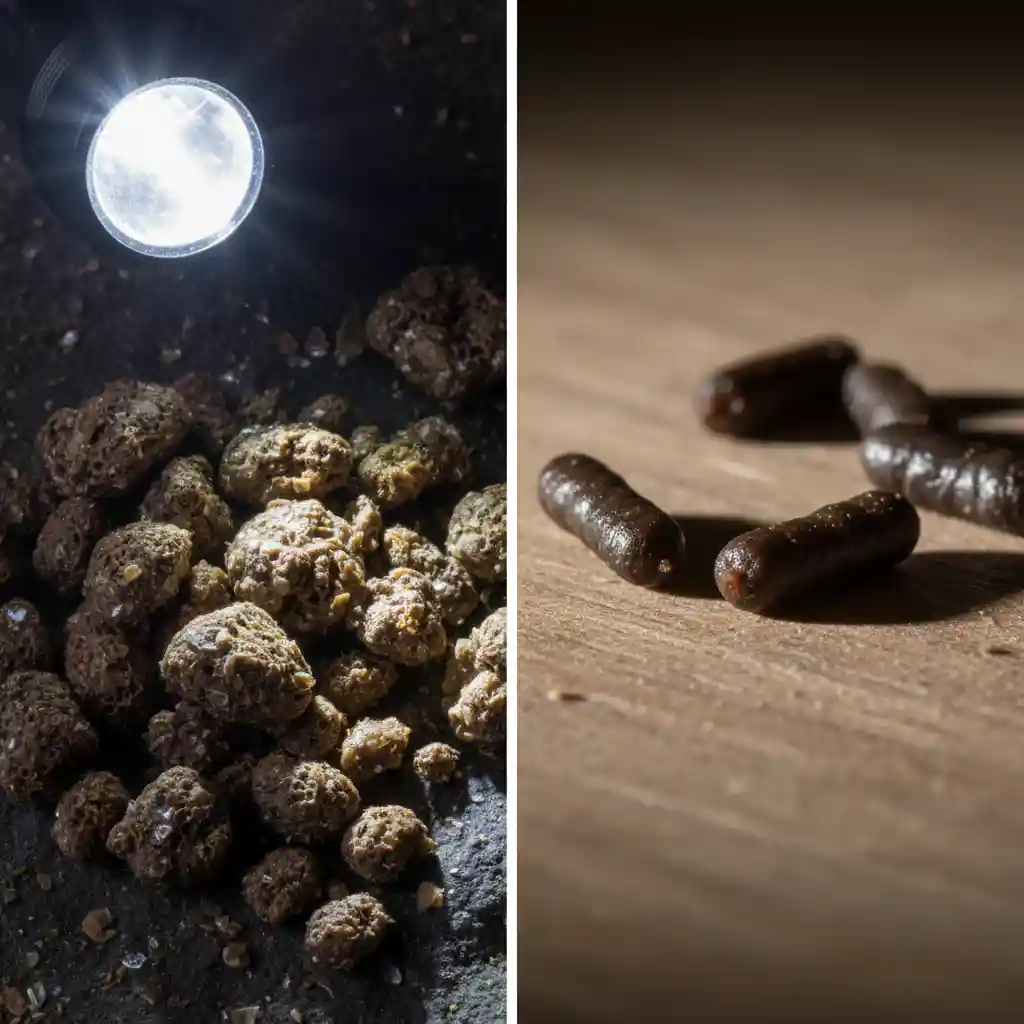
ou climbed up into the attic to grab a suitcase, and your flashlight beam landed on something you didn’t want to see: hundreds of little black pellets scattered across the insulation.
Your heart sinks. Is it mice? Rats? Or something worse?
To the untrained eye, mouse droppings and bat guano look almost identical. They are both small, dark, and rice-shaped. But mistaking one for the other is a dangerous (and expensive) error.
If it’s mice, you have a pest problem. If it’s bats, you have a biological hazard and a federal protection issue.
I’ve spent years crawling through Texas attics, and I’m going to teach you the quick field test—The Sparkle Test—that we use to tell the difference without a microscope.
The “Sparkle” Test (Do This Safely)
Bats eat insects. Millions of them. That means their waste is largely composed of indigestible insect parts—specifically, the shiny exoskeletons of bugs. Mice, on the other hand, eat grains, seeds, and scraps.
Here is how to check:
Shine your brightest flashlight directly on the droppings. Move the light beam back and forth slowly.
-
If it shimmers or sparkles: You are looking at Bat Guano. Those tiny glints of light are pieces of moth wings and beetle shells embedded in the poop.
-
If it looks dull and matte: It’s likely Mouse or Rat droppings.
The “Crush” Factor (Do NOT Touch With Bare Hands)
If the visual check isn’t clear, the texture tells the rest of the story.
Warning: Never touch droppings with bare hands. Use a stick or a gloved hand, and wear a mask. Bat guano carries Histoplasmosis spores that become airborne when disturbed.
Take a stick and try to crush a pellet.
-
Bat Guano: It will crumble instantly into a dry, dusty powder. It’s fragile.
-
Mouse Droppings: These tend to be hard, solid, and putty-like. They don’t turn to dust easily unless they are extremely old.
Location: The “Pile” vs. The “Trail”
Where you found the mess is just as important as what it looks like.
Mice run along walls. They poop while they run. You will find mouse droppings scattered along baseboards, on top of boxes, or in random lines following their travel routes. It’s usually spread out.
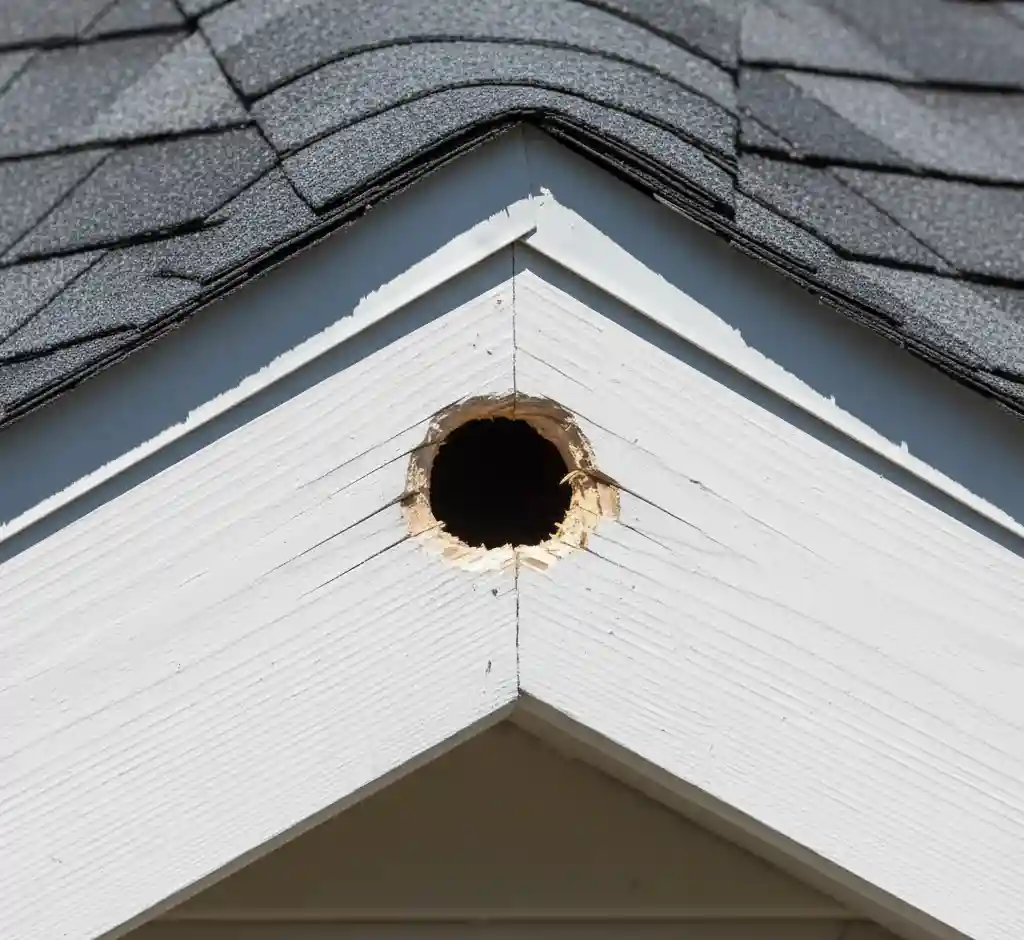
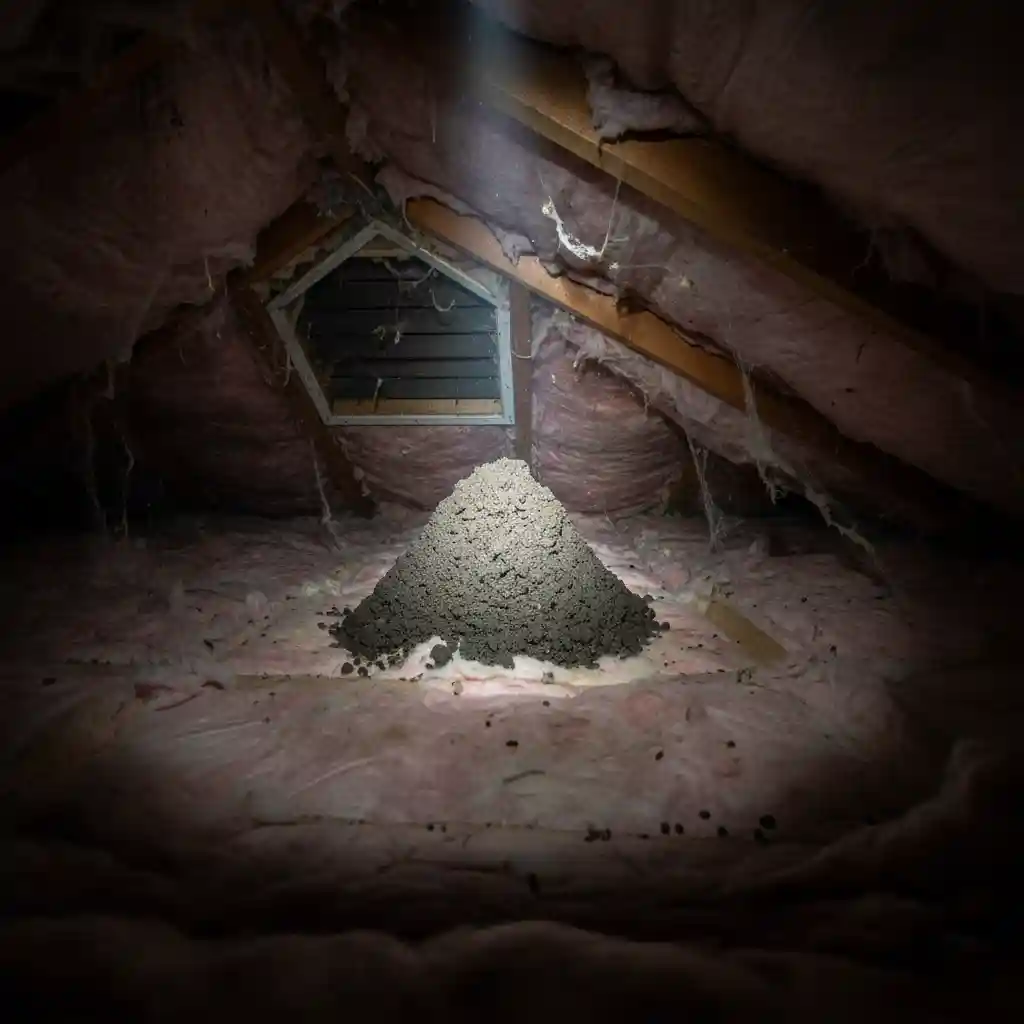
Bats don’t run; they roost. They hang upside down from the highest points of your attic—usually the ridge vent, gable vents, or near the chimney. When they go to the bathroom, it falls straight down.
If you see a concentrated pile of droppings that looks like a small pyramid directly underneath a high point in your roof, you have a bat colony roosting right above that spot.
Comparison Summary
| Feature | Bat Guano | Mouse Droppings |
| Appearance | Shiny, sparkly (insect parts) | Dull, matte finish |
| Texture | Crumbles to dry dust easily | Hard, solid |
| Shape | Irregular, blunt ends | Tapered, pointed ends (like rice) |
| Distribution | Piled up in mounds | Scattered along paths |
| Smell | Strong ammonia/musty odor | Urine smell (if infestation is heavy) |
Why The Difference Matters (The Dollar Signs)
Misidentifying the poop leads to the wrong solution.
If you treat a bat problem like a mouse problem, you will fail. You can set a thousand mouse traps on the floor, but the bats hanging on the ceiling won’t touch them.
Furthermore, bat guano is toxic. As it piles up, it grows a fungus that releases spores. Breathing these spores causes Histoplasmosis, a severe lung infection. Cleaning it up isn’t a matter of sweeping it with a broom—that just launches the spores into the air and into your AC ducts. It requires industrial vacuums with HEPA filters and full protective suits.
So, It Sparkles. Now What?
If you did the light test and saw that tell-tale shimmer, stop. Do not disturb the pile.
Bat removal is strictly regulated in Texas. You cannot legally kill them, and you cannot seal them out during maternity