
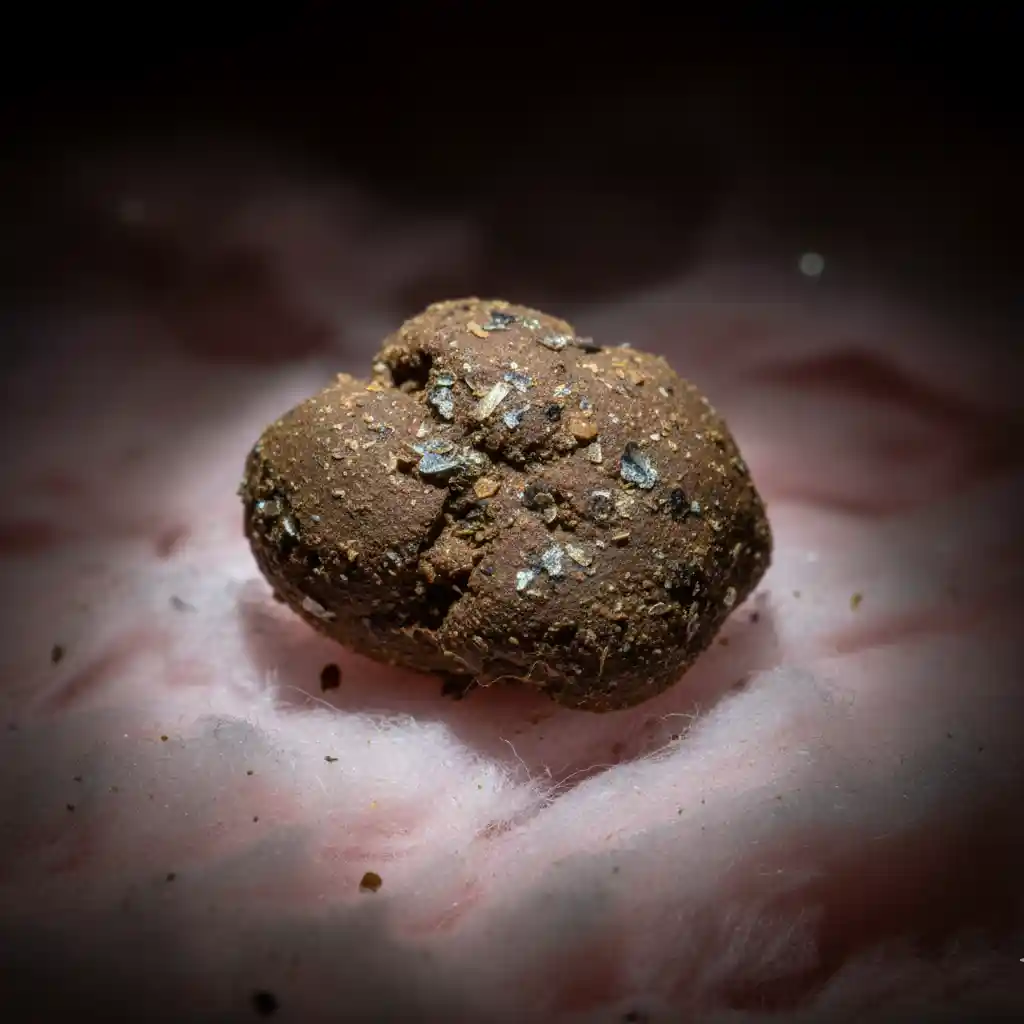
Last night, I Googled “Bat guano vs mouse droppings”.
Honestly? It made me angry.
The top five articles were a mix of generic home decor sites and what looked like AI-generated fluff. They all parroted the same textbook advice: “Mouse poop looks like rice, and bat poop looks like rice too.”
Useless.
In a pitch-black attic, holding a flashlight in your teeth, how are you supposed to tell the difference between two grains of “black rice”?
Worse, some of these articles actually suggested you “just sweep it up.” That is dangerous advice.
I’m the guy who crawls through Texas attics for a living. I deal with raccoons, bats, and rats every single day. And my experience is that textbook theories don’t work when you’re knee-deep in insulation.
Today, I’m not giving you a lecture. I’m going to tell you how I actually tell the difference in the field. These are the details you won’t find on Wikipedia.
The Contrarian View: Why “Looking at the Shape” is a Trap
Those top-ranking articles tell you to get a magnifying glass and look at the shape.
“Mouse droppings are pointed; bat droppings are rounded.”
Give me a break.
Who is going to crawl onto a biohazard-filled attic floor to study the tapered end of a piece of poop?
My experience is this: Don’t look at the shape. Look at the texture and the shine.
That is the only way to tell them apart instantly.
1. My Secret Weapon: The Sparkle Test
This was the first thing my mentor taught me.
What do bats eat? Mosquitoes, beetles, moths.
These insects have wings and hard shells (exoskeletons). Bats can’t digest that stuff.
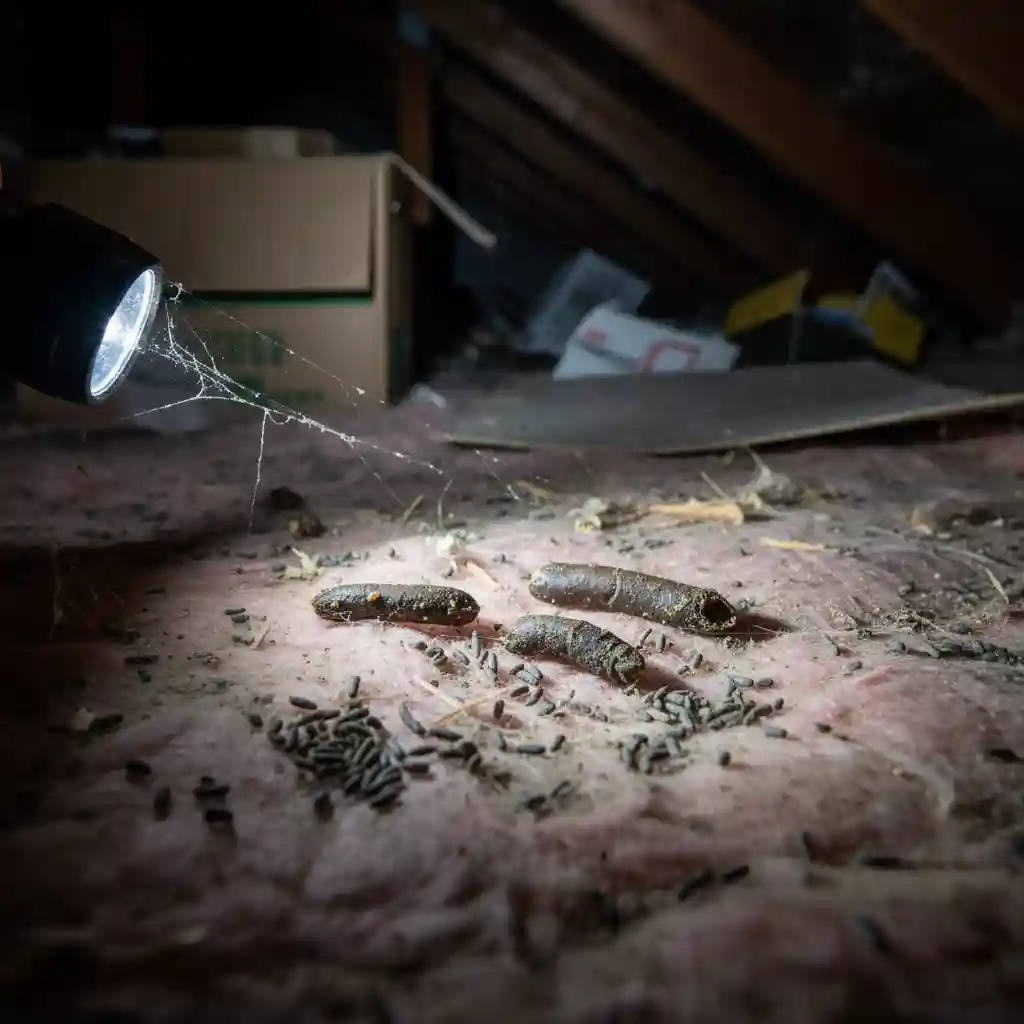
Turn your flashlight on high beam and shine it directly on the droppings.
-
If you see it sparkle: Even just tiny, glitter-like specks reflecting the light. That is Bat Guano. Those sparkles are insect wings.
-
If it looks dull and matte: It looks like dark, dried putty. That is Mouse or Rat droppings. Rodents eat grain and trash; their waste doesn’t shine.
It’s that simple. You don’t need a magnifying glass. You just need a light.
2. The “Crush” Test (The Brutal Truth)
WARNING: Do NOT touch this with your bare hands. Use a stick, and wear a mask.
Take a stick or a tool and press down on one of the pellets.
-
Mouse Droppings: They are hard. If they are fresh, they are soft and putty-like; if they are old, they are rock hard. They flatten or resist crushing.
-
Bat Guano: It is extremely fragile. Ideally, you barely touch it, and it crumbles instantly into a dry, dusty powder.
Why didn’t the other articles mention this? Because the authors have never actually poked a pile of guano.
A Real Case Study: The “Mouse” Problem in Austin
Last month, I took a call in Round Rock, just north of Austin. The homeowner, Sarah, was a young mom.
She told me, “I have mice. I saw droppings all over the attic. I bought a dozen snap traps, left them up there for a week, and haven’t caught a single one.”
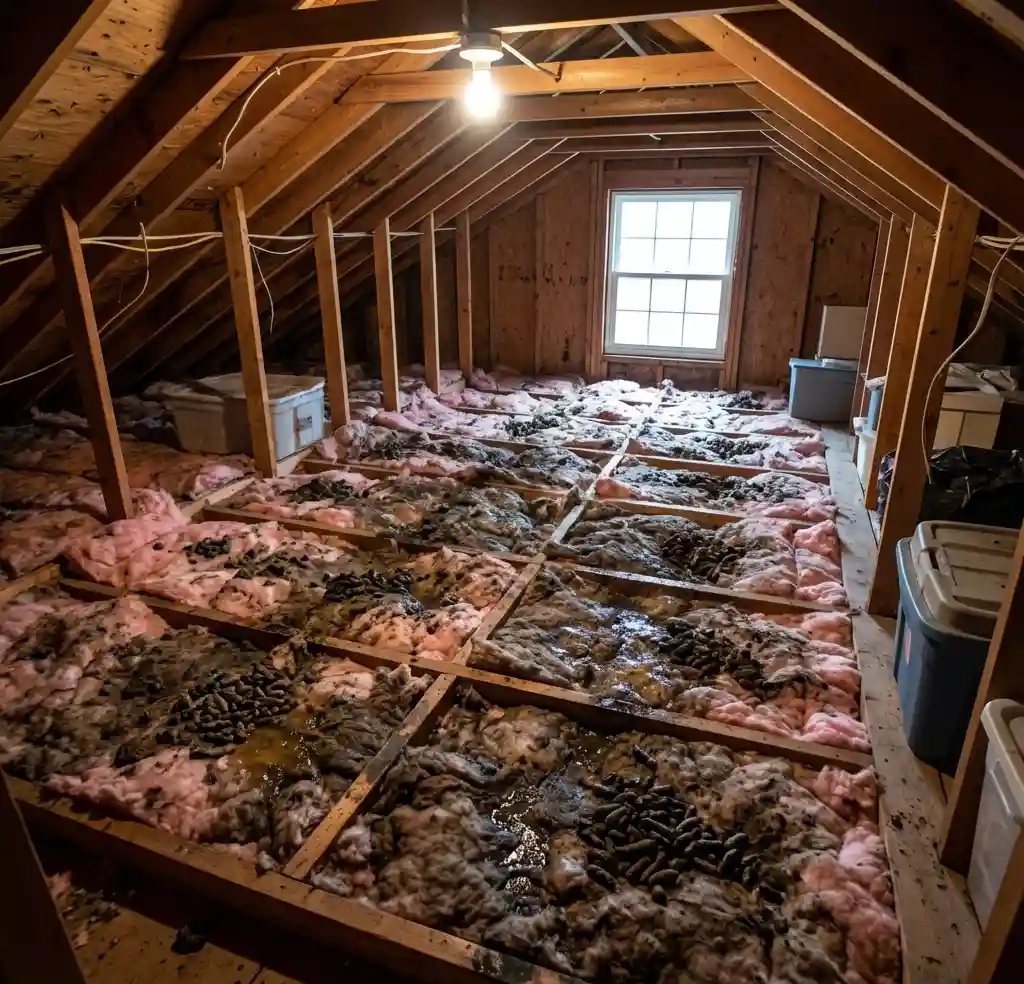
I went up to the attic. Sure enough, the floor was covered in black pellets.
To an amateur, it looked like a mouse invasion. But I looked at where the mess was, and my stomach dropped.
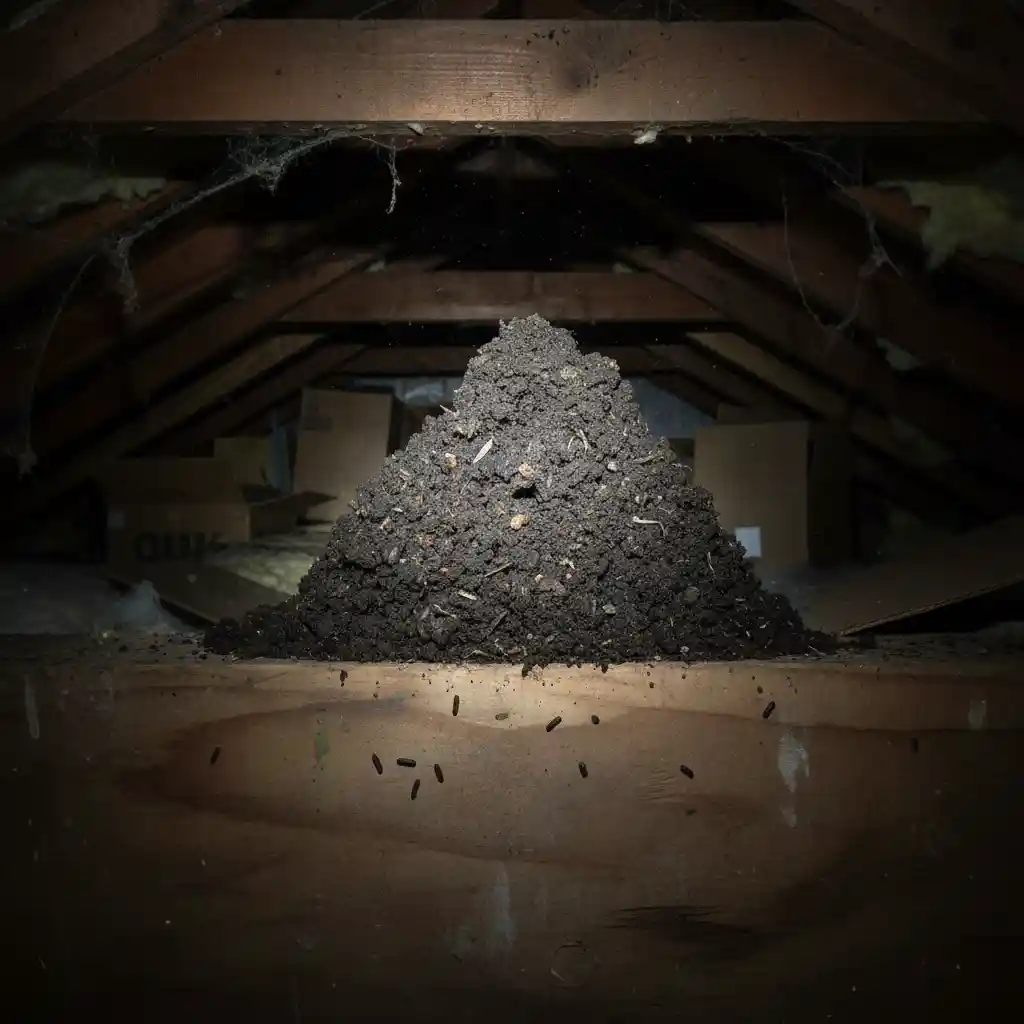
The droppings weren’t scattered along the walls (how mice travel). They were piled up in a “mini pyramid” directly underneath the ridge vent.
Mice don’t fly. They don’t hang from the ceiling to use the bathroom. Only bats do that.
Sarah had made a critical mistake: She had tried to sweep up the “mouse poop” with a broom.
Bat guano contains a fungus that, when disturbed, releases microscopic spores into the air. If you breathe them in, you can contract Histoplasmosis—a severe lung infection that mimics tuberculosis.
I had to tell her to take her kids to the doctor immediately, and we had to bring in a professional biohazard cleanup crew.
If she had known that “Piles = Bats”, she could have saved herself thousands of dollars in medical bills and remediation costs.
The Deep Dive: A Comparison Table That Actually Works
Stop reading generic guides. Here is the breakdown based on what I see in the field:
| Feature | Mice / Rats | Bats | Expert Note (My Take) |
| Location | Scattered along walls, baseboards, or on top of boxes. Linear trails. | Piled up in mounds. Usually directly under a vent, chimney, or high peak. | See a “pyramid”? That’s a bat toilet. |
| The Shine | Matte, dull, dark. | Sparkles (contains insect scales). | Use your flashlight. If it glitters, it’s bats. |
| Hardness | Hard, solid, or putty-like. | Brittle, crumbles to dust instantly. | Guano is basically dry dust held together. |
| The Smell | Sharp ammonia (urine smell). | A distinct musty, sweet, rotting odor. | Bat attics smell like a damp cave mixed with rot. |
| Stains | Hard to see with the naked eye. | Visible. Walls may have greasy black streaks near entry holes. | Bats have oily fur; they leave rub marks at entry points. |
Why DIY Cleanup is Insane
I’ve seen too many tutorials saying, “Just wear gloves, spray some bleach, and sweep it up.”
I think that is irresponsible advice.
If you are dealing with a few mouse droppings? Sure, maybe. But bat guano?
-
You are breaking the law: In Texas, bats are protected. If it’s maternity season (usually spring/summer), you literally cannot evict them, let alone block their entry. If you seal a hole and trap baby bats inside to die? That’s a massive fine.
-
You are risking your lungs: I wasn’t joking about Histoplasmosis. A paper dust mask isn’t enough. We wear full Tyvek suits, respirators, and use industrial HEPA vacuums. Sweeping it just launches the spores into the air—and into your AC ducts.
-
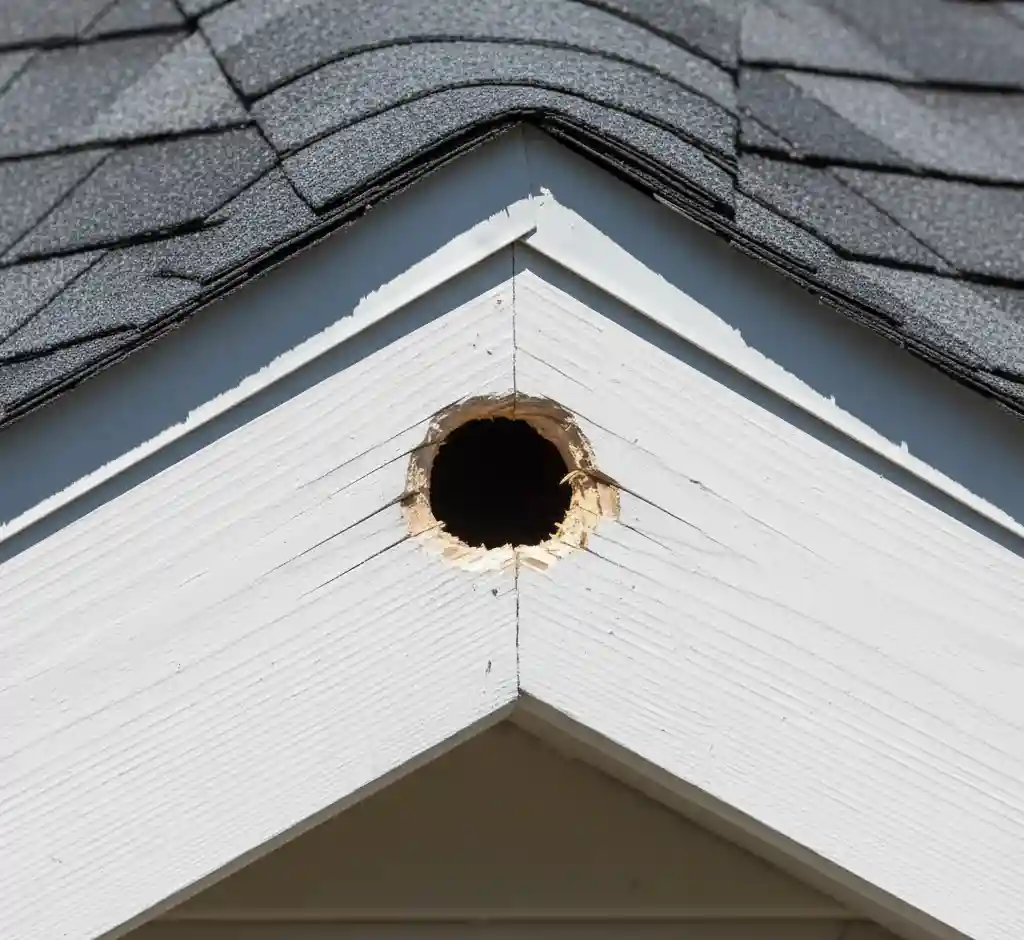
You can’t seal them out: A bat can squeeze through a gap 3/8 of an inch wide. That’s the size of your pinky finger. Do you really think you can find every single 3/8-inch gap on your roofline?
My Honest Advice
If you shine your light and see that “sparkle,” or if you see a “pile.”
Stop.
Don’t touch it.
Don’t sweep it.
This is way beyond a “weekend DIY project.” You need professional Exclusion (sealing the home) and Sanitization.
Don’t gamble with your lung health.
If you aren’t sure what you’re looking at, snap a photo and upload it to our Free AI Tool, or just call us. Our technicians are local, and we can be there in 2 hours to tell you exactly what you’re dealing with.