A nest under the hood is not just a cleaning question. You need to establish whether an animal remains, what material is affected and whether the vehicle needs mechanical work. A clear patch at the top of the engine does not answer all three.
First decide whether the vehicle should stay where it is
If you have already seen an animal, do not reach toward it or use the engine, a fan or compressed air to drive it out. Keep people and pets clear. Where an animal cannot leave or its position is uncertain, ask local animal control or an appropriate wildlife responder for advice before moving the vehicle.
If the material is visible but no animal is seen, contact the mechanic with that description—not “the mouse is gone.” Ask whether they can inspect the vehicle where it is, whether recovery is needed and how the suspected contamination should be communicated to the person transporting it. This guide cannot certify that a car is safe to drive from a photograph.
Where the vehicle is parked matters. Do not start an engine in an enclosed garage to relocate the problem. Describe access restrictions to the service provider. Smoke, a suspected fuel leak or another immediate hazard calls for the appropriate emergency response rather than a nest inspection.
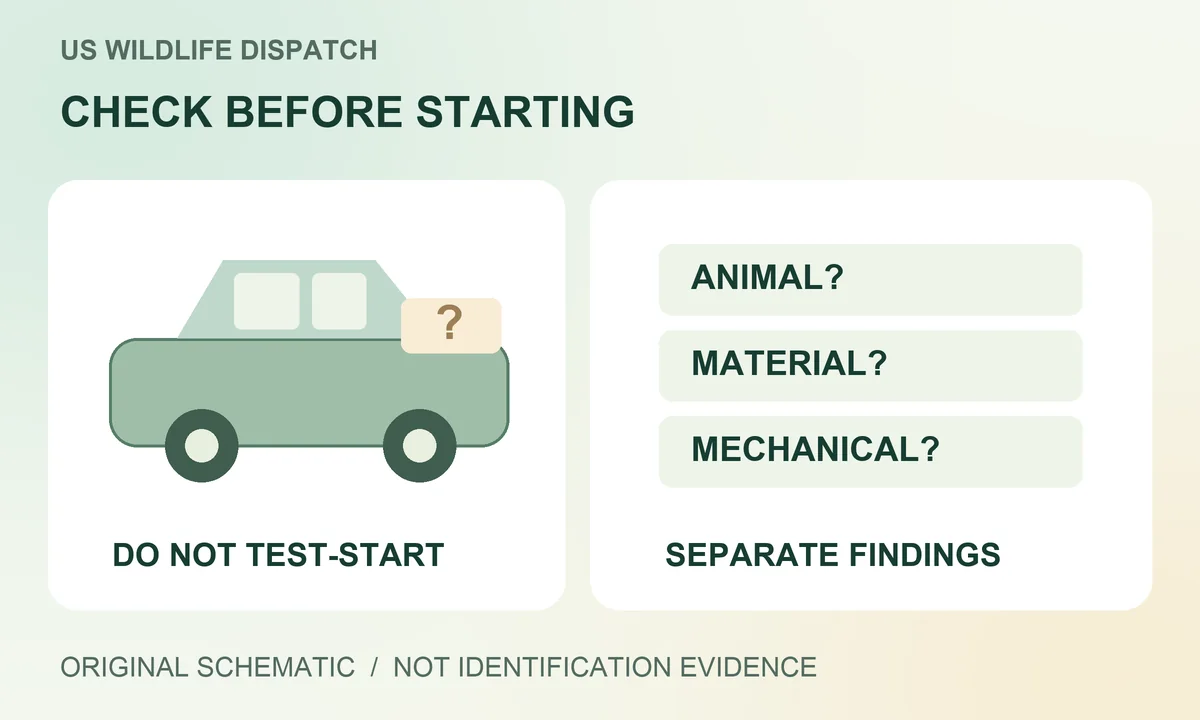
Three findings to keep separate
- Animal presence
- Record what was actually seen and where. A pile of leaves, chewed insulation or stored food is not a species identification. A brief look also cannot rule out an animal elsewhere in the car.
- Contaminated material
- Report visible waste or nesting material without touching, shaking or vacuuming it. CDC and King County provide rodent-specific cleanup guidance. Do not substitute an ordinary car-detailing routine.
- Vehicle condition
- Ask the mechanic which accessible and hidden parts need checking before use. King County identifies air-intake and filtration components among possible nesting locations and notes that damaged wiring can also affect operation. That is a reason to investigate—not proof that every nest damaged the wiring.
Write “not inspected” beside anything concealed by a cover. Do not open an intake, dismantle a filter housing, disconnect a battery or touch electrical components to finish this checklist. Model-specific service instructions matter, including for hybrids and electric vehicles; this is not a universal electrical-isolation procedure.
What to send the repair provider
- Make, model and year, plus the last known use and last known inspection.
- The visible material's location, described without reaching in: for example, “leaves beside the engine cover.”
- Whether a live animal was seen, and its last visible position.
- Any existing photos, warning messages, odors or operating problems—without restarting to collect them.
- Whether the car was previously swept, vacuumed, sprayed or worked on, so the next person knows what has changed.
These are our communication prompts, not a diagnostic standard. Give the shop an opportunity to explain whether it handles contaminated material or needs another provider. “We service cars” does not establish that contaminated ductwork is included.
Cleaning does not replace the mechanical decision
CDC's vehicle guidance distinguishes inspection, contaminated-material removal and prevention. King County explains that an extensive problem can require work on filters, ducting or other components by qualified automotive professionals. Ask what was actually examined and which areas remain inaccessible.
A useful completion record separates material removed, components checked or replaced, and unresolved locations. An exterior wash or fragrance treatment is not evidence that an intake was examined. Nor does a completed mechanical repair document that every affected interior surface was addressed.
For illness or exposure concerns, ask a healthcare professional or local health department and describe the activity involved. Finding rodent signs does not establish that you acquired an infection.
After the current problem: reduce another opportunity
CDC advises against leaving food in a vehicle. Once the current contamination and mechanical questions are resolved, remove ordinary food sources from clean areas and agree on future inspection checks with the mechanic. Do not add mesh, oils, chemicals or devices to vehicle openings on the basis of a generic pest tip.
If nearby stored feed was damaged, use the feed-storage guide for that separate problem. It does not prove the feed caused this particular nest. Keep a dated record so a new observation can be distinguished from material already documented.
Sources and limits
Sources reviewed October 21, 2026 (U.S. Eastern date). CDC's vehicle and rodent-cleanup sections and King County's vehicle guidance support the inspection and cleanup distinctions. Their detailed battery, disinfectant and removal procedures are not reproduced here. Our handoff checklist is editorial; no vehicle has been inspected, no species identified and no repair or insurance outcome promised.