This guide concerns stored household belongings: decorations, fabric, books and mixed supplies. Food has a different disposal question, covered in the feed-storage guide. A chewed carton alone does not identify a mouse or prove that every item inside is contaminated.
Pause the unpacking, not just the vacuum
Keep children and pets away. Record the location and visible signs without emptying the box onto a bed or living-room floor. If moving or opening it would disturb waste, leave that task unresolved and ask an appropriate cleanup provider how it should be handled.
Mark what is known: damaged carton, visible material on the lid, or waste among the contents. “Not yet inspected” is a valid label for the interior. Do not use smell or the ease with which material crumbles as a safety test.
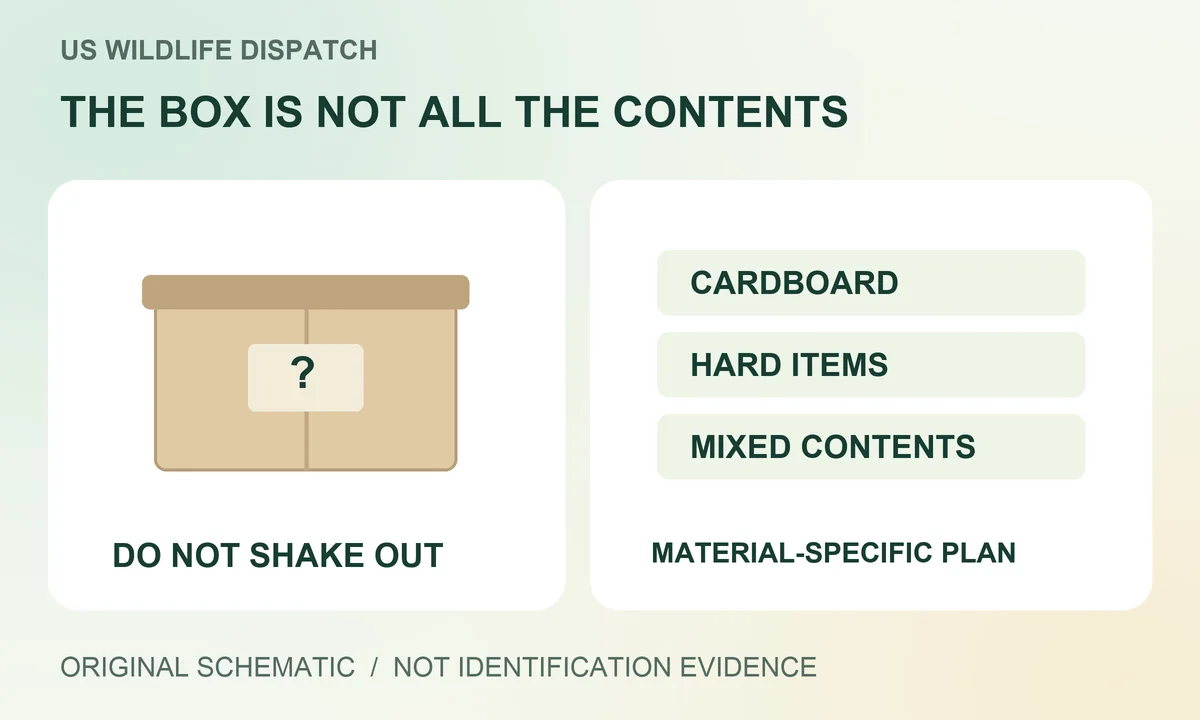
Make three material decisions
- Cardboard affected by urine or droppings
- CDC recommends disposal of contaminated cardboard boxes. That statement concerns the container; it does not mean every unrelated object in the storage room must be discarded.
- Hard, nonporous containers and objects
- CDC describes material-specific cleaning and disinfection. A washable exterior does not establish that fabric, electronics or paper inside can receive the same treatment.
- Fabric, paper and other mixed contents
- CDC gives separate instructions for textiles, upholstery and non-washable materials. Choose the relevant material section before planning any treatment; do not soak a mixed box or treat one waiting time as clearance for all contents.
We do not supply a disinfectant mixture or exposure-clearance recipe. Material compatibility, the actual contamination and the current product instructions all matter. If a valuable or delicate item cannot tolerate a proposed method, seek appropriate conservation or manufacturer advice before treatment; this page does not promise salvage.
What if the whole storage area has signs?
CDC distinguishes heavy infestations from ordinary cleanup. Multiple affected locations, accumulations or inaccessible nests should be described to the provider before work. This article does not define a safe number of droppings or specify protective equipment that makes every job suitable for DIY.
If belongings are in a seasonal home about to be occupied, the reopening guide covers rooms, hidden areas and equipment. Cleaning a single tote is not clearance of the house. Conversely, finding one affected box does not prove every room has the same problem.
A contents list that helps the cleanup decision
- Container material and visible condition, without emptying or disturbing it.
- Contents known from labels or existing records, with unknown items marked as such.
- Where suspected waste was actually seen: outside, lid, top layer or deeper material already exposed.
- Any previous movement, vacuuming, spraying or attempts to wash the contents.
- Which items are essential, replaceable or need specialist handling before a method is chosen.
This is an editorial inventory, not a contamination test. Do not open additional boxes just to finish the list. Ask the provider how they will separate affected and clean items, handle waste and document any limits.
Before repacking clean belongings
Resolve the present material-handling and entry questions first. A new tote does not disinfect its contents or certify the storage room. Keep clean replacement supplies apart from unresolved items and retain product labels where applicable.
Record where repacked items were placed and who will check the area. If new signs appear, compare them with the previous record rather than assuming they are old. Do not block a required appliance outlet or ventilation opening to protect one storage shelf.
Sources and limits
Sources reviewed October 27, 2026 (U.S. Eastern date): CDC: outbuildings, cardboard, different surfaces and heavy infestations. The practical inventory and work sequence are our synthesis. No material has been tested, disease risk estimated, item certified safe or salvage outcome promised. This is not a food, medical-device or commercial-warehouse protocol.