Quick Answer
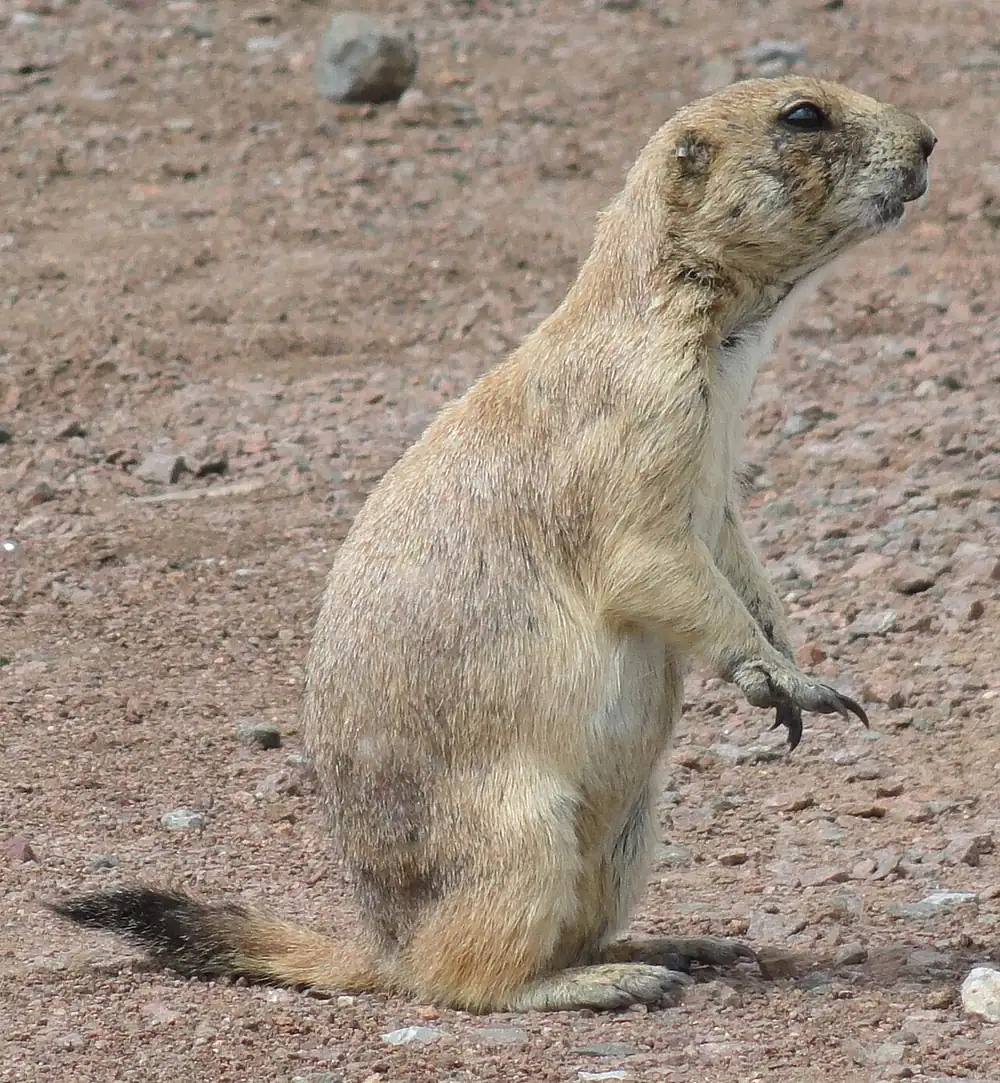
The fastest way to tell a prairie dog from a ground squirrel in Nebraska is size and what the animal does at its hole. Black-tailed prairie dogs are the biggest burrowers on the Plains — roughly the size of a small cantaloupe, 1–2 feet long and up to 3 pounds — and they live in open colonies where they bark, yip, and raise a "junkyard-dog" alarm. Richardson's and thirteen-lined ground squirrels are much smaller (under a pound), quieter, and usually scamper for cover instead of standing and barking. Prairie dog mounds are huge flattened cones ringed by bare dirt; ground squirrel holes are small neat openings with a thin ring of spoil.
Prairie Dog vs Ground Squirrel: Why People Get Them Confused
Nebraska sits at the crossroads of two great grassland burrowers, and homeowners, ranchers, and hikers mix them up all the time. From the western Sand Hills to the eastern tallgrass, black-tailed prairie dogs (Cynomys ludovicianus), Richardson's ground squirrels (Urocitellus richardsonii), and thirteen-lined ground squirrels (Ictidomys tridecemlineatus) all dig in open ground, all are active in daylight, and all sit bolt-upright on their hind legs when they see you coming. The Nebraska Game and Parks Commission (NGPC) and University of Nebraska-Lincoln (UNL) Extension both field questions about which one is digging on a property.
The practical stakes are different, too. A thriving prairie dog town can strip pasture and create horse-breaking holes across a field, and it changes how the land is managed. Ground squirrels are a lawn and garden nuisance a homeowner can usually manage on the spot. Getting the species right decides what control is legal, over what scale, and how much effort is worth it.
Quick Comparison Table
| Feature | Black-Tailed Prairie Dog | Richardson's Ground Squirrel | Thirteen-Lined Ground Squirrel |
|---|---|---|---|
| Size | 14–18 in. body, up to 3 lbs | 9–11 in. body, 10–12 oz | 6–7 in. body, 4–6 oz |
| Coat | Tan to buff, lighter belly, black-tipped tail | Buffy gray-brown, no stripes, darker cap | Brown with 13 dark-and-light stripes down the back |
| Tail | Short, black-tipped, held flat "junkyard-dog" style | Fluffy, pale-edged | Short, narrow |
| Built | Chunky, heavy, rounded cheeks | Stout, gray, shovel-like claws | Slim, elongate, runs in a low slink |
| Burrow / Mound | Large flattened cone of bare dirt, colony of mounds | 3–5 in. opening with hard-packed apron, clustered colonies | Small 2–3 in. neat hole, thin ring, often near cover |
| Call | Loud barking yips, alarm calls | Sharp whistle, then dives for cover | Usually silent, bolts in a straight line |
| Hibernation | No true hibernation; torpor in the coldest weeks | Yes, winters underground | Yes, winters underground |
| Nebraska Range | Western Sand Hills and High Plains, open shortgrass | Northern prairies along the border and northern plains | Statewide in short grass, lawns, roadsides |
The Black-Tailed Prairie Dog: The Colony Builder
Black-tailed prairie dogs are the largest and most social of the three. An adult is roughly as heavy as a half-gallon of milk, with a chunky, rounded body, small ears set low, and a short tail that's tipped in black — the "black-tailed" in the name. They are sandy-tan to buff on top with a paler belly, and their cheeks look almost jowly. They live in towns that can stretch over hundreds of acres, honeycombed with burrows built close together, and they are highly vocal: the sharp two-bark yip that carries across a pasture is a prairie dog alarm.
In Nebraska, wild prairie dogs are concentrated west of the tallgrass, on the Sand Hills and High Plains where shortgrass and open grazing land dominate. Outside a few managed public populations, black-tailed prairie dogs today occupy a fraction of the range they once held on the Plains. Where they do thrive, their colonies are famous for aerating heavy soils, providing prey for eagles and ferruginous hawks, and — on rangeland — for denuding forage and creating hazards where livestock and horses step into a burrow.
Richardson's Ground Squirrel: The Northern Prairie Colonial Digger
Richardson's ground squirrels are sometimes called "picket-pin gophers" or, on the northern plains, "flickertails" for the twitchy, flicking tail motion they make while standing. They are larger than thirteen-lined squirrels — 10–12 ounces — with buffy gray-brown fur, a slightly darker cap between the ears, and a fluffy pale-edged tail. They build colonies of burrows on pastures, hayfields, roadsides, and the edges of Hi-Line towns, with bare 3-to-5-inch openings clustered by the dozen where the colony has chipped away loose soil for years.
To a quick glance, a Richardson's at its mound can read as a small prairie dog — both sit erect, both live in colonies, both frolic-and-dive. But the size gap is decisive: a Richardson's is about a quarter the weight of an adult prairie dog, paler and grayer rather than tan, and its openings are a few inches wide with a flat dirt apron, not the huge flattened cone of a prairie dog mound.
Thirteen-Lined Ground Squirrel: The Striped Lawn Digger
The thirteen-lined ground squirrel is the one most people actually see in a Nebraska yard. It is small — about six inches of body — and instantly recognizable by the 13 alternating light-and-dark stripes that run the length of its back (the stripes are broken into dashes, which separates it from gray squirrels and chipmunks). It is sleek and elongate, runs in a low, straight-line slink, and stays quiet. Its 2-to-3-inch holes appear as neat rings of dirt on lawns, ballfields, and cemeteries, often with the squirrel itself visible by day before it dives into the burrow.
Because thirteen-lined squirrels are so common in residential short grass, most "prairie dogs in the yard" reports are actually this animal. The quick tell: if the digging animal is small, striped, and in an ordinary suburban lawn, it's almost never a prairie dog.
Burrows and Mounds: The Ground-Level Difference
If you can't get a clear look at the animal, the earth itself settles it. A prairie dog town shows big, flattened, crescent-shaped spoil piles — each mound a bushel or more of bare dirt, with the opening usually plugged or burrowed through and dozens of mounds spread across open ground. Thirteen-lined squirrels leave tidy little 2-to-3-inch holes with just a thin skim of dirt around the rim. Richardson's holes sit in the middle: a few inches across, ringed by an apron of hard-packed dirt, and clustered in colonial groups on pasture rather than in a mowed yard. For how these rodent burrows compare with snake holes in damp ground, see our Snake Holes vs Rodent Holes Identification Guide.
Behavior and Calls: Seeing vs Hearing
Prairie dogs are the only one of the three that truly barks. Stand near a town in spring and you'll hear the rising-falling eh-eh-eh alarm pass from burrow to burrow; the famous "junkyard dog" two-bark warning and the bow-and-bounce territorial display are prairie-dog signatures. Richardson's are next-most vocal, letting out a sharp whistle before diving to cover. Thirteen-lined squirrels are essentially silent and just run. Behavior also splits on hibernation: in Nebraska, ground squirrels hibernate through the coldest months, so like the digging animals on our Nebraska Yard Digging Guide, they vanish in deep winter — while prairie dogs, though they may stay torpid in a cold snap, do not hibernate the same way and re-emerge whenever the ground thaws.
Damage in Yards, Lawns, and Pasture
Thirteen-lined ground squirrels are the lawn nuisance: neat holes, grazed seedlings, raided birdseed, and collapsed burrows under walkways. Richardson's are the farm nuisance, eating forage and mounding holes across hayfields and rights-of-way. Prairie dog colonies are the land-use issue, blading vegetation over large areas and opening burrows that break horse and cow legs. On rangeland, many Nebraska landowners accept gophers precisely for the aeration, but nobody accepts a prairie dog town in a hayfield. For ground-squirrel control that fits a residential setting, removing birdseed, leaving short clean grass, and excluding gardens is the standard first step; individual trapping rarely outruns a reproducing colony. Prairie dog management at scale is a landowner decision best made with your county UNL Extension agent.
FAQ: Prairie Dog vs Ground Squirrel in Nebraska
Do prairie dogs live in Nebraska?
Yes. Black-tailed prairie dogs occur in the western Sand Hills and High Plains in open shortgrass country. They are not common in eastern Nebraska or in suburban lawns, so a small striped rodent in an Omaha or Lincoln yard is a ground squirrel, not a prairie dog.
Are prairie dogs and ground squirrels related?
Yes, they are cousins in the squirrel family. Both are ground-dwelling squirrels of the genus Cynomys (prairie dogs) and Urocitellus/Ictidomys (ground squirrels). That's why they look alike — and why size, tail, and burrow shape matter for telling them apart.
How big is a prairie dog compared to a ground squirrel?
A black-tailed prairie dog runs about 1–2 feet long and up to 3 pounds. A Richardson's ground squirrel is about 9–11 inches long and 10–12 ounces, and a thirteen-lined ground squirrel is only 6–7 inches and 4–6 ounces. A prairie dog is many times heavier than a thirteen-lined squirrel.
What's the fastest way to tell them apart in the field?
Look at the tail and the mound. A big tan animal with a black-tipped tail that barks, over a large flattened cone of bare dirt, is a prairie dog. A smaller striped (or plain gray) animal at a neat small hole, staying quiet and running low, is a ground squirrel.
Are prairie dogs protected in Nebraska?
Black-tailed prairie dogs are a jurisdiction of the Nebraska Game and Parks Commission, and control practices on private land are regulated. Always check current NGPC rules before any lethal control, and work with your county UNL Extension office — the law and best practices have both changed on the Plains in recent years.
Do ground squirrels and prairie dogs live in the same colony?
They can overlap on the same pasture, but they don't share burrows. Prairie dogs build their own distinct towns with large mounds; thirteen-lined and Richardson's ground squirrels maintain separate, smaller burrows nearby without mixing into a prairie dog town.
Sources: Nebraska Game and Parks Commission (NGPC), University of Nebraska-Lincoln (UNL) Extension, U.S. Fish & Wildlife Service (USFWS) prairie dog range data, USDA APHIS Wildlife Services. This guide is for informational purposes only and does not constitute professional wildlife management advice.