Quick Answer
The fastest way to tell a raccoon from a squirrel in your attic is when you hear it. Raccoons are nocturnal — you hear heavy, slow thumping, dragging, and occasional chattering at night (10 PM–4 AM), sounds heavy enough to vibrate the ceiling. Squirrels are diurnal — you hear fast scurrying, scratching, and rolling gallops during the day, especially at dawn and dusk. Raccoons are 10 to 20 times heavier (10–25 lbs vs 1–1.5 lbs), so their noise is unmistakably heavier, and their damage (torn ducts, chewed wiring, destroyed insulation) is far more severe.
Why Identifying Your Attic Visitor Matters
Raccoons and squirrels sound similar to a homeowner lying in bed at 2 AM, but the two animals require completely different responses. Raccoons are larger, stronger, and more destructive — they can tear ductwork apart and break through drywall. They also carry a parasite (Baylisascaris roundworm) that is a serious human health risk, especially to children. Squirrels are smaller, gnaw constantly, and are usually easier to exclude.
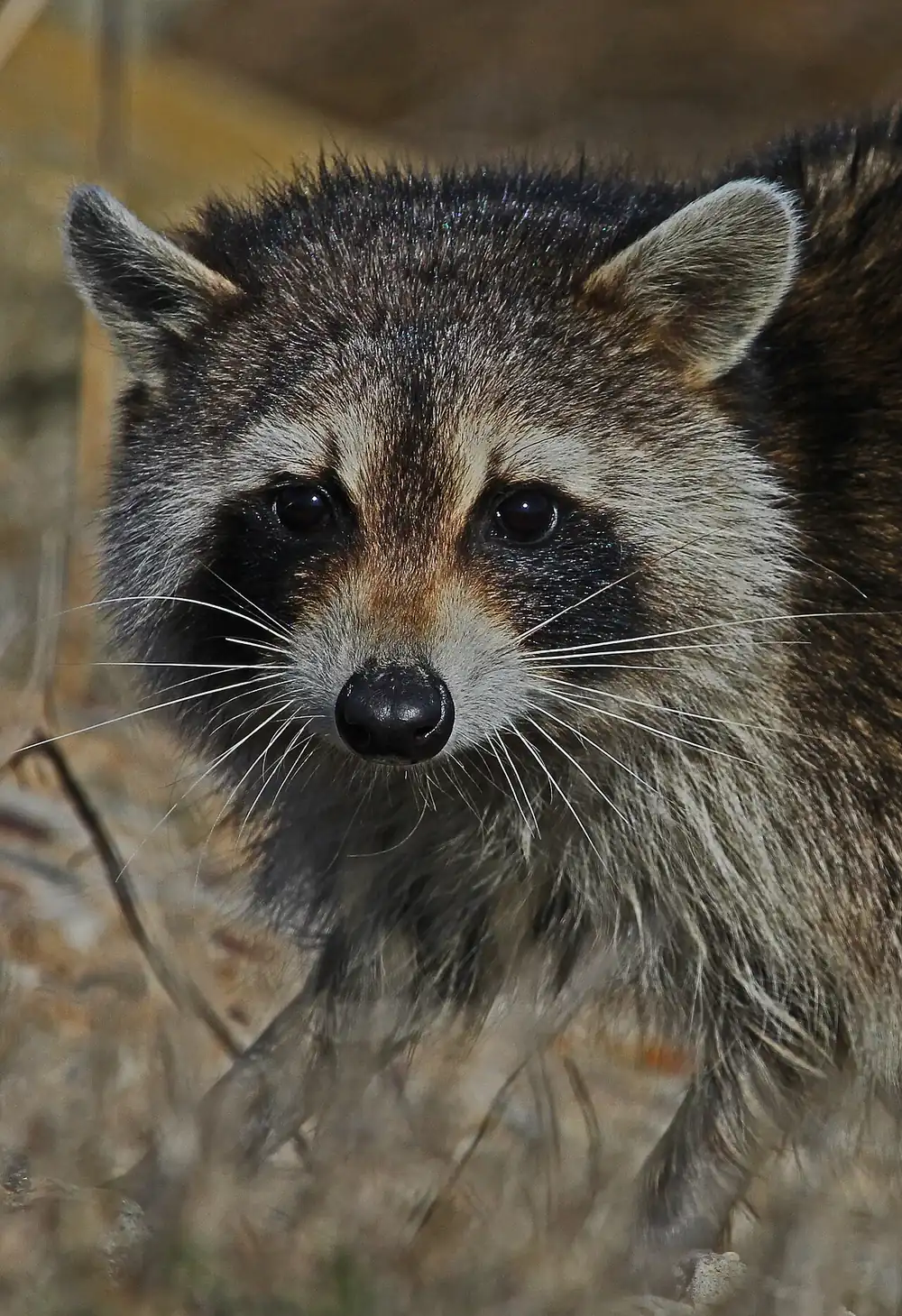
Legally, the two species are treated very differently in most states. Raccoons are typically classified as nongame or furbearer species — in states like Texas, you can take a raccoon damaging your property, but relocation often requires a permit and many states require a licensed professional. Squirrels are usually game or protected wildlife — you generally cannot poison them, and the legal, effective answer is one-way exclusion. Mistaking one for the other can mean breaking the law or wasting weeks on the wrong method.
For the third common attic invader — rats — see our Squirrel vs Rat in Attic guide. For raccoon versus opossum, see Possum vs Raccoon Identification and Raccoon vs Opossum Tracks.
Raccoon vs Squirrel: Complete Comparison
| Feature | Raccoon | Squirrel |
|---|---|---|
| Active hours | Night (nocturnal) | Day (diurnal), dawn & dusk |
| Weight | 10–25 lbs | 1–1.5 lbs |
| Sound type | Heavy thumping, slow walking, dragging, occasional chattering | Fast scurrying, scratching, rolling gallop, nut-dropping pings |
| Ceiling vibration | Yes — audible from rooms below | Mild — scratching more than vibration |
| Entry hole | 3+ inches; may tear/break openings wider | 2+ inches; clean gnawed edge |
| Damage | Torn ducts, broken drywall, large areas of matted insulation, latrine areas | Gnawed wires/wood, scattered insulation, stored food caches |
| Droppings | Large (1/2–3/4 in), tubular, often in a shared "latrine" pile | 3/8 in, barrel-shaped, scattered |
| Health risk | High — raccoon roundworm (Baylisascaris) | Low — rare disease transmission |
| Legal status | Nongame/furbearer — trap rules & relocation permits vary | Game/protected — no poison; exclusion preferred |
Identifying by Sound: The Most Reliable Method
Because you usually hear the animal before you see it, sound is the fastest and most reliable clue. The single best question is: what time is it?
Raccoon Sounds (Night)
- Timing: 10 PM–4 AM — raccoons are nocturnal
- Volume: Heavy; can wake you from sleep; vibrates the ceiling
- Type: Slow, deliberate thumping and walking; dragging sounds; occasional low chattering or hissing; a mother raccoon moving kits sounds like two or three animals
- Pattern: Steady movement for several minutes at a time, pausing, then moving again
Squirrel Sounds (Day)
- Timing: 5–7 AM and 4–6 PM — squirrels are diurnal
- Volume: Light to moderate; scratching you notice when the house is quiet
- Type: Rapid scurrying, high-pitched scratching, a rolling gallop across the ceiling, and pings when acorns or nuts are dropped
- Pattern: Short bursts of frantic activity followed by silence
The 10-Second Sound Test
| Question | Raccoon | Squirrel |
|---|---|---|
| Do you hear it at night? | Yes — likely raccoon | No — squirrels sleep at night |
| Do you hear it in daylight? | Rarely (raccoons den in daytime) | Yes — likely squirrel |
| Does the ceiling vibrate? | Yes — heavy animal | No — too light |
| Does it sound like a person walking? | Yes — slow, heavy footsteps | No — quick scampering |
Damage Comparison
Raccoon damage is structural. A raccoon in the attic will tear HVAC ductwork to reach a nesting spot, break through drywall or ceiling tile (they weigh 10–25 lbs and force their way through), and flatten large areas of insulation into matted bedding. They establish a regular latrine — a corner they return to for droppings — which smells strongly of ammonia and is a serious health hazard. If you see torn ducts or holes punched through drywall, think raccoon.
Squirrel damage is concentrated and gnawed. Squirrels chew constantly to keep their incisors trimmed. You will find gnawed wires (a fire risk), chewed wood framing and soffit edges, insulation shredded for a nest, and caches of nuts, acorns, or seed in corners. The entry hole is usually a clean, gnawed 2-inch opening. For more on squirrel damage, see our Squirrel vs Chipmunk Damage guide.
Entry Points
Raccoons are strong enough to force their way through existing gaps and weak points. They commonly enter through damaged roof vents, loose soffits, uncapped chimneys, and gaps where rooflines meet. They may tear or bend flashing and siding to make an opening bigger — a 3-inch or larger hole, often with torn edges, points to raccoon.
Squirrels gnaw their own openings at the roofline: soffit corners, fascia boards, roof vents, and where tree branches overhang the roof. Holes are typically 2 inches or larger with clean, evenly gnawed edges.
Droppings and Nests
Raccoon droppings are large (roughly 1/2 to 3/4 inch), tubular, and often contain undigested seeds or fur. They are usually deposited in one concentrated latrine area. Handle raccoon droppings with extreme care — they can carry Baylisascaris procyonis (raccoon roundworm), whose eggs can survive for years and are dangerous if ingested, especially by children. Cleanup should follow state health department guidance, and if you are unsure, hire a professional.
Squirrel droppings are smaller (about 3/8 inch), barrel-shaped with rounded ends, and scattered rather than piled. For a full breakdown of droppings differences, see our Mice vs Rats Droppings & Sounds guide.
Health and Safety
The biggest difference in risk comes down to raccoon roundworm. Raccoons use attics as latrines, and their droppings can carry Baylisascaris eggs. This is why raccoon cleanup is not a DIY job for most homeowners — the recommended protocol involves removing contaminated insulation, ventilating the space, and following strict disinfection steps. Squirrels carry a much lower disease risk to humans, though their droppings and urine can harbor leptospirosis and salmonella, so you should still wear gloves and an N95 mask and avoid sweeping or vacuuming dry droppings.
Control and Exclusion: Why Identification Changes the Approach
Raccoon Control (Legal Considerations)
Raccoons are nongame or furbearer species in most states. On your own property, you are generally allowed to take a raccoon that is causing damage, but the legal path is usually live trapping (often with a permit) or hiring a licensed wildlife removal professional. Relocating a raccoon across long distances is restricted in many states, and releasing it on someone else's property is illegal in most jurisdictions. Because raccoons are strong and can bite, and because young may be present, professional exclusion (one-way doors, entry sealing after the animal leaves) is the recommended approach. See our Texas Wildlife Removal Laws guide for a detailed state example.
Squirrel Control
Squirrels are game or protected wildlife in most states — poisoning is illegal and inhumane, and it risks secondary poisoning of pets and owls. The legal, effective answer is one-way exclusion: install a one-way door at the entry, let the squirrel exit, then seal the opening with hardware cloth or metal flashing. Then trim tree branches that overhang the roof. For the broader prevention checklist, see our How to Animal-Proof Your Home: Fall Entry Points guide.
FAQ: Raccoon vs Squirrel in Attic
Can raccoons and squirrels be in the attic at the same time?
Rarely. Raccoons are nocturnal and squirrels are diurnal, so they do not directly compete, but a raccoon will usually dominate an attic space and a squirrel will avoid it. If you hear daytime scratching and heavy nighttime thumping, it is worth checking for two separate entry points — raccoons and squirrels often enter through different gaps.
Do squirrels make noise at night?
Almost never. Squirrels are diurnal. The exception is flying squirrels, which are nocturnal — but they are much smaller (2–4 ounces) and make light, fluttery sounds, nothing like the heavy walking of a raccoon.
What does raccoon noise in the ceiling sound like?
Heavy, slow, deliberate — like a person walking across the attic, sometimes dragging something. You may also hear low growls or chattering. The weight and slowness of the footsteps is the giveaway versus a squirrel's fast scampering.
How do I know if raccoon droppings are in my attic?
Look for a concentrated pile of large tubular droppings (1/2–3/4 inch) in one corner, often with a strong ammonia smell. That latrine pattern is a raccoon signature. Do not touch it — raccoon roundworm eggs are a serious health risk; have it assessed by a professional.
Is it legal to trap a raccoon in my attic myself?
It depends on your state. In many states you can live-trap a nuisance raccoon on your own property, but trapping season, permit, and relocation rules vary widely — some states require a permit or a licensed trapper, and most restrict where you can release it. Check your state wildlife agency before setting any trap.
Can I poison a squirrel in my attic?
No. Poisoning squirrels is illegal in most states, inhumane, and causes secondary poisoning of pets and raptors. Use one-way exclusion and seal entry points instead.
Sources: Centers for Disease Control and Prevention (Baylisascaris), Texas Parks & Wildlife Department, Pennsylvania Game Commission, National Pest Management Association, USDA Wildlife Services. This guide is for informational purposes only and does not constitute professional wildlife removal or legal advice. Check your state and local regulations before trapping, relocating, or excluding any animal.