
You usually don’t see the first rat. You see the damage, or you get a weird feeling that something in your house has changed.
Most homeowners wait until they actually spot a mouse scurrying across the kitchen floor to call us. By that point, I hate to tell you, but you don’t just have “a mouse.” You likely have a multi-generational family living in your insulation.
Rodents are masters of invisibility. They’ve evolved over thousands of years to live right next to humans without being detected. But they aren’t ghosts. If you know where to look—and what to smell—you can catch them before they chew through your main electrical line.
Here is what I look for when I walk into a home for an inspection, even when the homeowner swears they haven’t seen a thing.
Trust Your Dog (The Staring Contest)
This is almost always the first clue. Customers tell me, “My retriever has been obsessed with the dishwasher lately,” or “The cat keeps staring at the blank wall in the hallway for twenty minutes at a time.”
You might think your pet is just being weird. They aren’t.
Rodents communicate at frequencies we can’t hear, and they scratch and scurry inside wall voids with surprising stealth. Your pets can hear that movement and smell the intruders long before you can. If your dog is whining at a cabinet or refusing to leave a specific spot in the room, pay attention. There is likely a nest directly behind that drywall.
The “Grease Trail” (Rub Marks)
This is a dead giveaway that separates the pros from the amateurs.
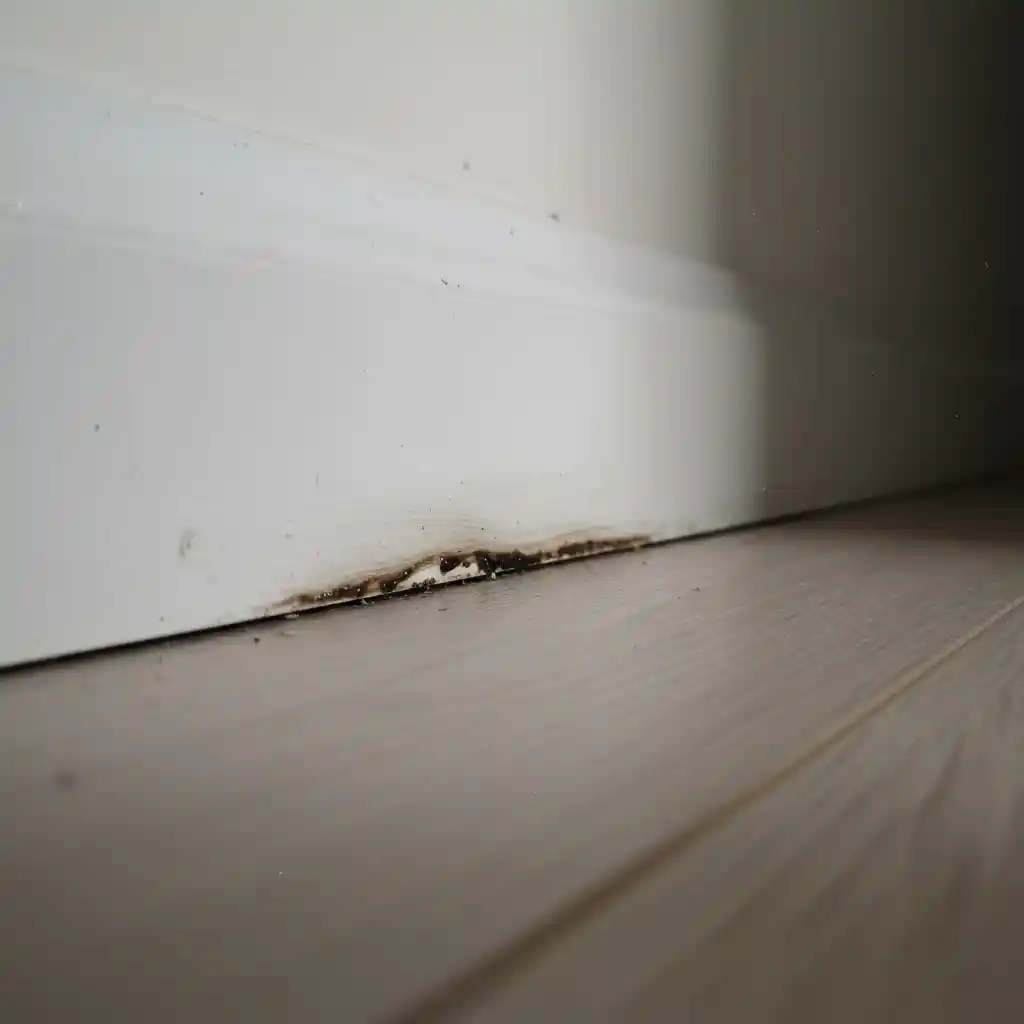
Rats and mice have incredibly oily fur. They are also creatures of habit; they are blind-ish and use their whiskers to navigate, so they hug the baseboards and walls as they travel the same path night after night.
Over time, the oil from their fur accumulates on your paint.
Go grab a flashlight. Shine it low along your baseboards, or look closely at the corners where two walls meet. Do you see a faint, dark smudge? It might look like dirt or a scuff mark, but if it feels greasy to the touch, that’s a rub mark. It’s a literal highway for rodents. We often see these around entry points into the attic or behind heavy appliances that haven’t been moved in years.
The “Ammonia” Mystery
“I keep cleaning the pantry, but it still smells musky.”
I hear this all the time. Rodent urine has a very distinct, sharp odor. It smells heavily of ammonia. In a closed space like a pantry, an attic, or a garage, that smell builds up fast.
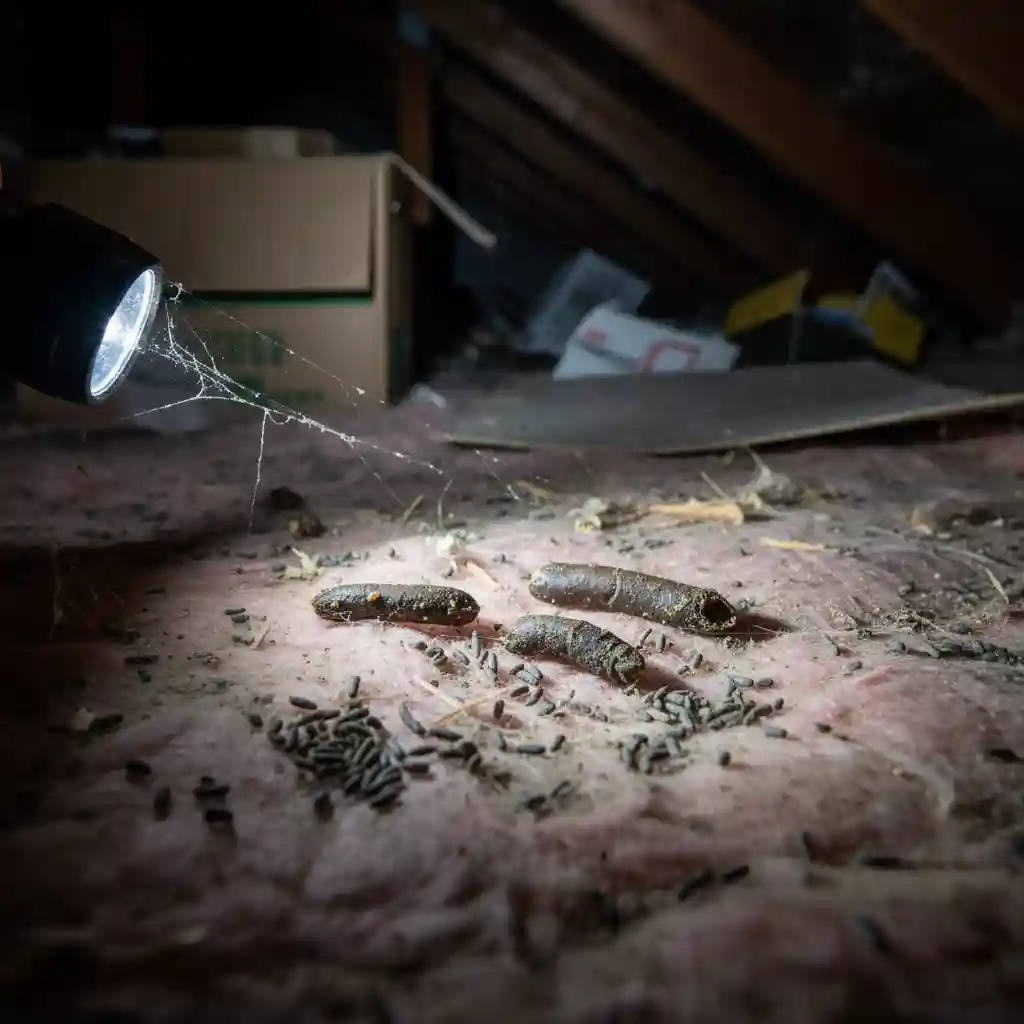
If you catch a whiff of something damp and acrid that reminds you of a dirty hamster cage, don’t ignore it. Even if you don’t see droppings, that smell indicates an active latrine site nearby, likely hidden under the insulation or behind the cabinetry.
Insulation That Looks “Trampled”
If you are brave enough to pop your head into the attic, don’t just look for the animal. Look at the floor.
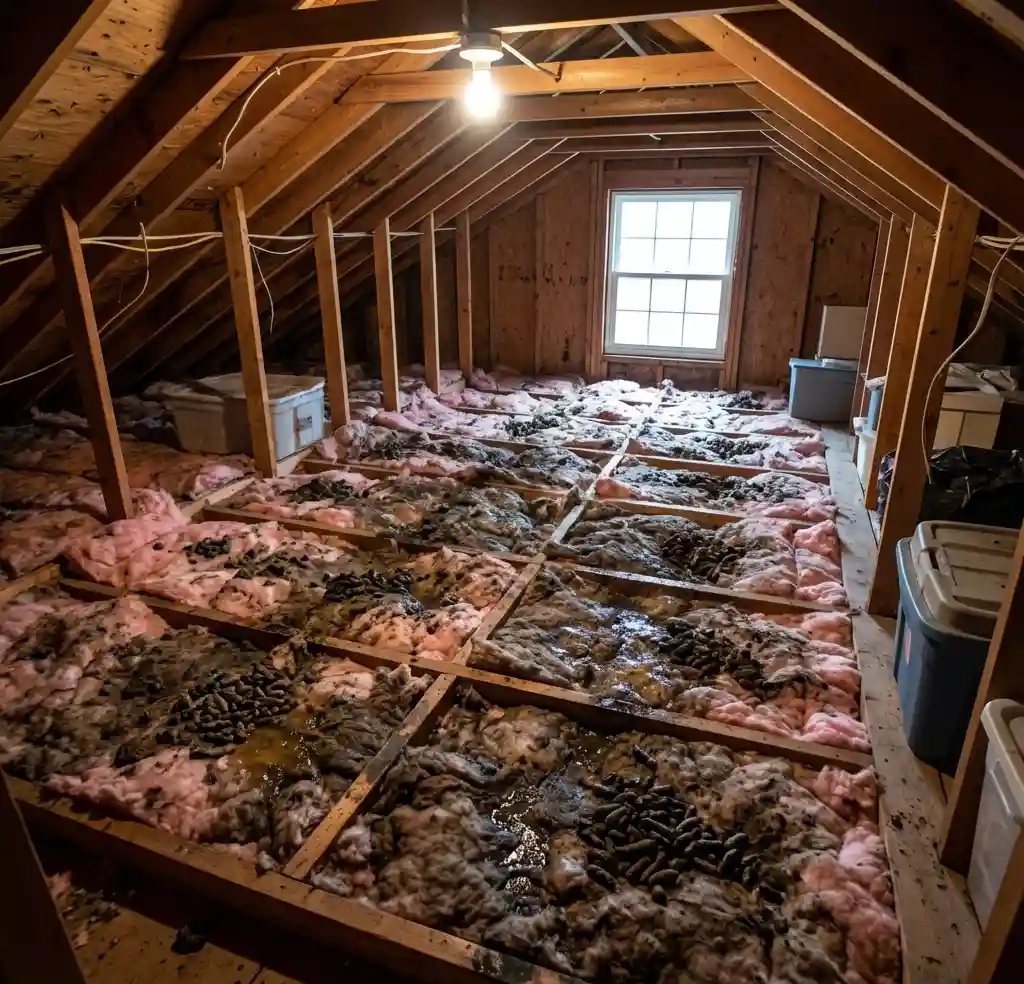
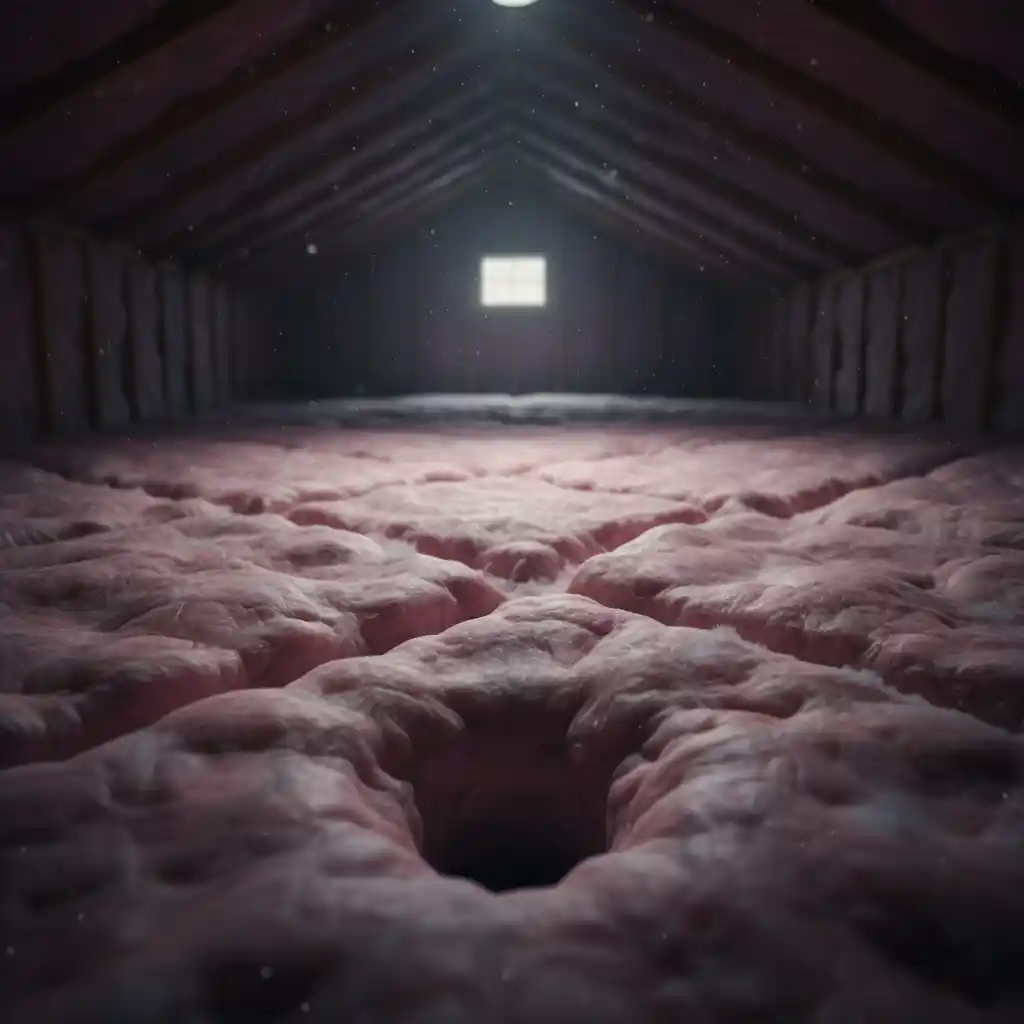
Blown-in fiberglass insulation should look like fluffy snow. If you have rats or squirrels, that “snow” will look matted down. You might see what looks like little trails or highways stamped into the fluff.
Even more telling? Tunnels. Roof rats love to burrow into the insulation to stay warm. If you see round holes about the size of a baseball diving straight down into your insulation, you’ve got a tenant.
Why Store-Bought Traps Often Fail
So you found a sign, and you bought a snap trap. Two weeks later, the cheese is gone, the trap hasn’t snapped, and you still hear noises.
Rats suffer from something called neophobia—the fear of new things.
If you drop a strange object (a trap) right in the middle of their highway, they won’t go for the bait. They will walk around it. They are suspicious of anything that wasn’t there yesterday. Professional removal isn’t just about the trap; it’s about placement, scent masking, and understanding the psychology of the animal.
What Should You Do?
If any of this sounds familiar—the staring dog, the smudge on the wall, the weird smell—you need to verify it immediately.
Don’t wait until they chew a wire and cause a short.
You can upload a photo of any droppings or damage to our Free AI Identification Tool to get a second opinion instantly.
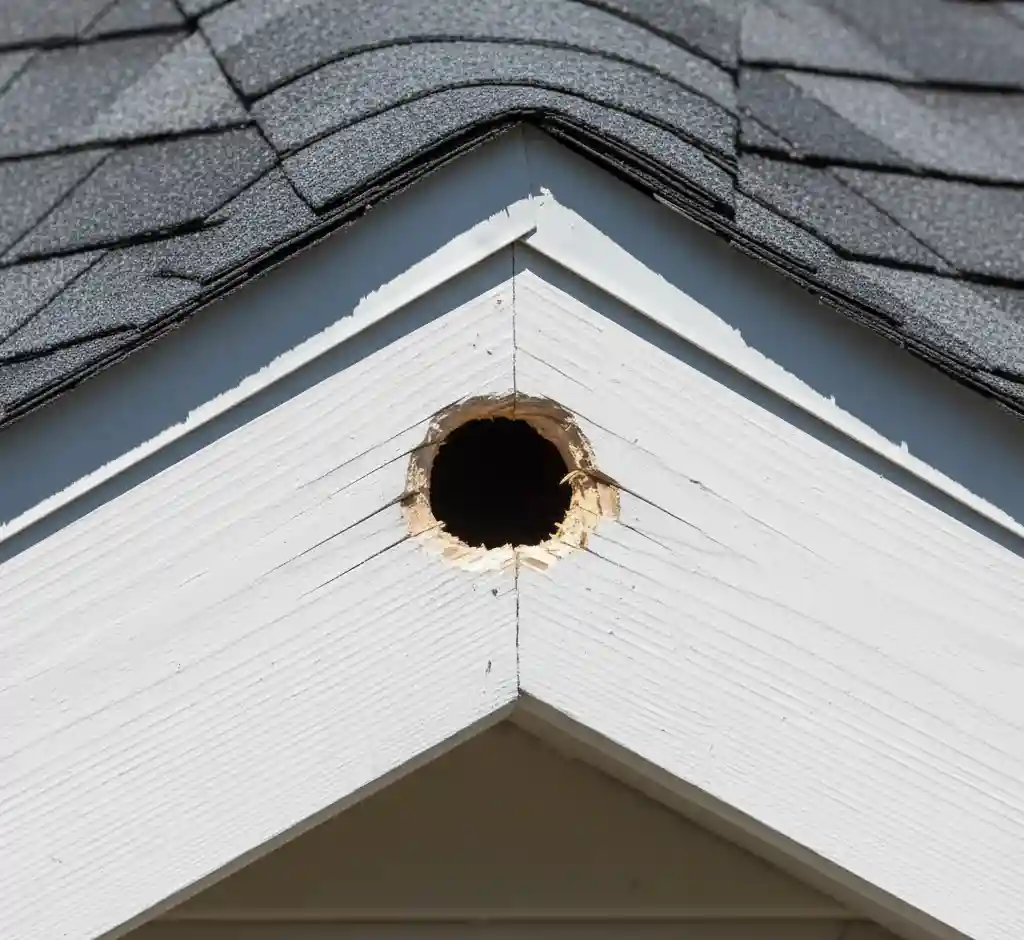
Or, if you’ve seen enough and want them gone tonight, call our dispatch team. We’ll get a licensed expert out there to read the signs and seal the entry points for good.