This guide is for a household that has found many new adult flies, wandering larvae or both. It helps you prepare a source check without treating every flying insect as a blow fly. It is not a forensic clock, a pesticide plan or a photograph-based clearance of a room.
Three questions before anyone opens a wall
- Are the insects identified? Save existing clear photographs and ask an Extension diagnostic service or qualified pest professional what further information they need. Record whether you saw adult flies, larvae or uncertain material. A metallic-looking body can be a useful description, not a completed species identification.
- What changed at the same time? Note recently emptied or overlooked garbage, ordinary pet waste, a long-closed room being reopened, and any recent wildlife or rodent work. Timing is a lead; it does not establish who caused the problem or when an animal died.
- What can be checked without entering a hidden or contaminated space? Look at ordinary accessible bins, doors and screens. Mark wall voids, ceiling spaces, chimneys and ducts as uninspected unless a suitable professional has actually examined them.
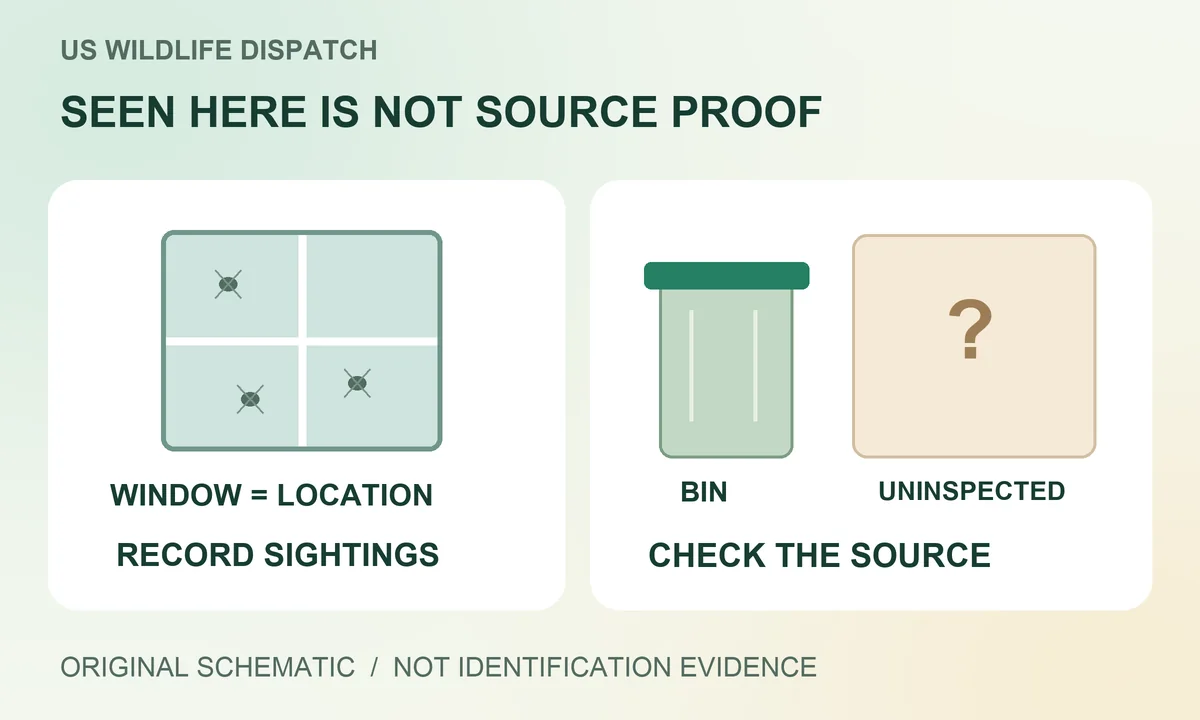
A visible source, an inaccessible source, or overwintering visitors?
Accessible ordinary garbage: University of Maryland Extension identifies garbage among the possible breeding materials for blow and bottle flies and recommends finding the larval source rather than relying on adult spraying. Secure and address ordinary household trash appropriately. If the material is an unknown animal carcass, suspected wildlife waste or inside equipment, do not treat that as the same cleanup job.
Repeated larvae or adults associated with a hidden space: record the actual locations and ask for insect identification plus a targeted source assessment. A concealed animal is one possibility, not a certainty. Ask what evidence justifies opening anything, how the affected material will be handled and which building professional is needed. Do not probe a cavity or take apart an appliance to investigate.
Flies in an upper room or at a window during colder weather: University of Minnesota Extension describes cluster and face flies sheltering in buildings, and some blow flies overwintering there too. That gives an alternative to a hidden breeding source. It does not make every winter fly harmless, identify a species from the calendar or establish your home as a Minnesota example.
Adult flies can gather at light. Record the window where they are seen without drawing an arrow from that window to a supposed carcass. Our diagram deliberately keeps the observation location and the source question separate.
Do fewer flies mean the source is resolved?
Keep dated observations after any work: room, insect type if confirmed, larvae versus adults, what source was found, and what was removed or repaired. A smaller daily count is useful to report but is not proof that a concealed source has been checked. We do not give a number of days after which every infestation ends.
Similarly, do not work backward from fly numbers to an animal's size or time of death. The Extension sources describe different flies and life histories, not a universal household countdown. If new insects keep appearing, send the changed observations back to the person responsible for the assessment.
A low-disturbance plan for today
- Keep food covered and manage ordinary household garbage so the source check is not undermined by accessible waste.
- Record visible screen or door damage without assuming that the nearest gap caused the problem. Do not seal unknown vents or drainage openings; our opening-function guide covers that distinction.
- If using an ordinary flyswatter for a few adults, keep the task separate from handling the surface or material beneath them. Do not vacuum unknown droppings or nesting debris along with insects. CDC's rodent-cleanup precautions apply to that different material.
- Do not turn an insect article's indoor-control tip into permission to spray wall voids, heating ducts or a suspected nest. This guide does not select or authorize a pesticide use.
These are limited housekeeping and information steps, not a claim that sanitation alone explains every case. If a smell might indicate a gas leak, leave and contact the gas utility or emergency service from a safe location; do not use flies as a reason to dismiss it.
Send the assessor a useful question
“On [date] we first noticed [adults / larvae / uncertain insects] in [rooms]. The photos show [observations], but the insects are not yet confirmed. Accessible sources checked were [list]; [hidden locations] remain uninspected. Recent changes include [events]. Please identify the insects and explain what evidence would justify a targeted source inspection before opening or treating any space.”
For a managed property, also identify who will approve any building work and who will document the source assessment. An invoice for adult fly treatment is not a record of a carcass being located, removed or a building entry being corrected.
Sources and limits
Sources reviewed October 19, 2026 (U.S. Eastern date). Minnesota's seasonal examples are not a nationwide calendar. Maryland's management guidance and Minnesota's page do not give identical pesticide advice; this article adopts no chemical treatment from either. The record and work-scope questions are editorial aids. No insect was identified, no home was inspected and no death date or clearance period was estimated for this guide.