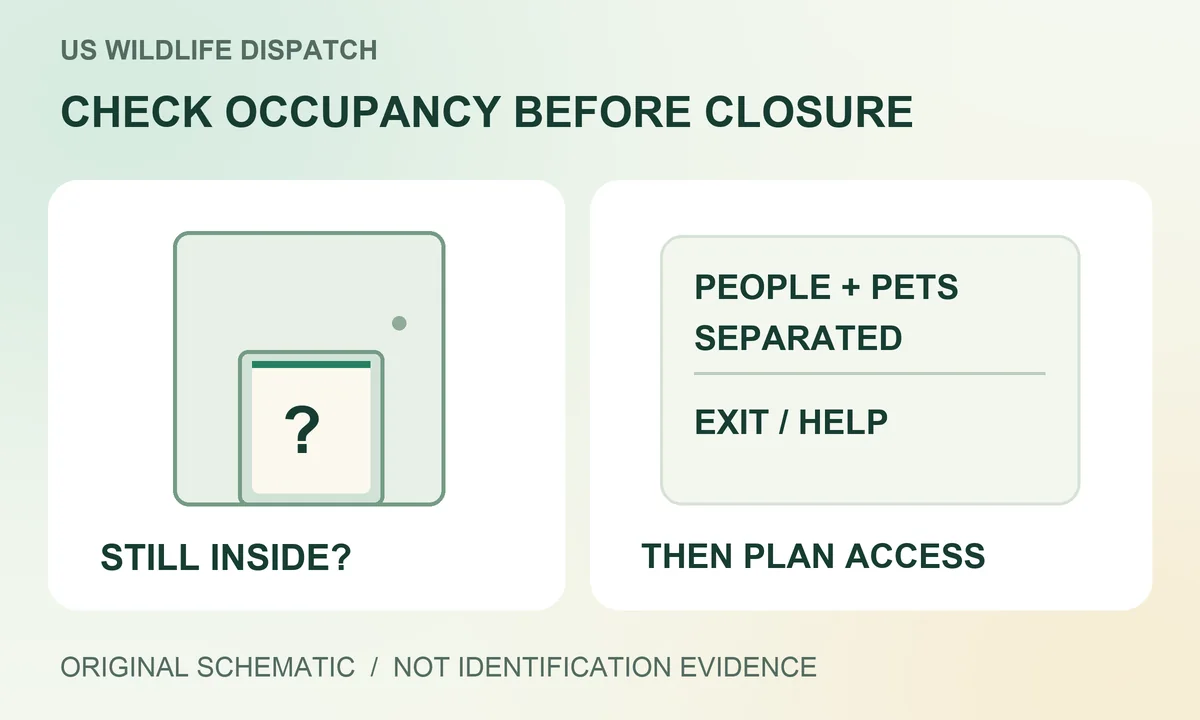
This page separates two situations: an animal already inside, and a visitor still outside an otherwise unoccupied doorway. Closing the flap can be sensible prevention in the second situation and the wrong first move in the first. It is not a catching guide, an assessment of your door or advice for handling a bat, snake or injured animal.
First: is it inside, outside or simply not accounted for?
Inside and visible: from a safe position, keep children and pets away. Do not send a dog after it, reach for it, or crowd the doorway for a photograph. If ordinary interior doors can be closed without moving toward the raccoon, PAWS recommends reducing access to surrounding rooms, leaving the room and allowing an exit. Do not cross its path to arrange this.
Outside only: if you can safely secure the pet door from the house and have accounted for your pets, use the closure intended for your model. Do not approach an animal at the flap to move it aside. Keep food away from the opening and arrange another supervised way for pets to go out while the entry problem is assessed.
Hidden or uncertain: do not treat a quiet room, a missing bowl of food or a briefly empty camera view as proof of departure. Tell the responder where the animal was last seen, which spaces it could access and which doors have been changed. Do not search behind furniture or inside wall spaces to complete that account.
When to stop arranging an exit and ask for help
Ask for assistance rather than trying to manage the room if an animal cannot leave, disappears into an inaccessible space, appears injured, or cannot be kept separate from people or pets. A local wildlife responder can advise on the particular animal and layout. We do not provide a waiting period after which a hidden visitor can be presumed gone.
If a person was bitten or scratched, or contact with a wild mammal may have occurred, contact a healthcare professional or local health department promptly for case-specific advice. For a pet, contact your veterinarian. CDC's exposure guidance is separate from the building-access decision; a normal-looking animal is not medical clearance.
Why the food and the doorway need separate attention
PAWS specifically connects some pet-door visits with food on the other side and recommends keeping pet food away from the opening. Texas A&M–Kingsville's wildlife bulletin also advises securing pet doors when not in use. Neither source establishes that moving a bowl alone will stop an animal that has already entered.
After the immediate situation is resolved, make a short entry record rather than assuming you need a new product:
- Route: was passage through this flap actually observed, or is another opening still possible?
- Door condition: is the closure present, visibly damaged or not engaging as expected? Describe only what can be checked without approaching wildlife.
- Access setting: record the model, current setting and who changes it. Ask the manufacturer how that model is meant to be secured.
- Food location: note accessible bowls and stored supplies near the opening; keep suspected contamination as a separate cleanup question.
- Pet arrangement: account for each pet before changing access and agree who will supervise trips outdoors.
These questions are our household planning aid, not an agency inspection standard. Do not drill, tape, wedge or fit an improvised barrier while occupancy is unresolved. An electronic label is not an inspection of the installed door; we have not tested a product or verified your setup.
What to ask before approving a change
Ask the responsible person to distinguish the immediate visit from prevention: “How was departure established? What part of the existing door failed or was left open? What closure is compatible with this model? How will we manage pet access while that is resolved?” Keep the answer with the original observations.
For another damaged building opening, the opening-function guide helps separate required ventilation or drainage from a repairable gap. It does not supply a pet-door specification. If supplies were affected, the feed-storage guide covers that different decision; do not use it as a reason to handle unknown waste.
Sources and scope
Sources reviewed October 19, 2026 (U.S. Eastern date). The indoor-exit example is specifically PAWS' raccoon advice, not a universal method for all wildlife. The 2016 Texas bulletin is used only for its pet-access prevention point, not current trapping law, disease treatment or cleanup methods. Local authorities decide the appropriate response to an animal that cannot leave. This site has not inspected the property and does not arrange removal.